How to talk to your parents about their will and inheritance tax
Home › News › How to talk to your parents about their will and inheritance tax
Alastair Greener FPSAGenerational communication expert, author and President of the PSA UK and Ireland 2026Published 17 November 2026 · 7 min read
From 6 April 2027, HMRC says most unused pension funds and pension death benefits will count towards a person's estate for inheritance tax. In a YouGov poll of 2,174 adults in June 2026, one in four over-55s had never discussed inheritance with their family, and 35% of 45 to 54 year olds had never had such conversations. This guide is about starting the talk, not the tax planning.
From 6 April 2027, HMRC says most unused pension funds and pension death benefits will count towards a person's estate for inheritance tax, which gives families a practical reason to talk. Many have not: in a YouGov poll for the wealth manager Mattioli Woods, one in four respondents over 55 had never discussed inheritance, and 35% of 45 to 54 year olds had never had such conversations.
The figures in this article were the latest available in mid November 2026. HMRC has said it will keep publishing guidance ahead of April 2027. This article is about the conversation and is not financial or legal advice. For the rules and for help with your own situation, use GOV.UK and MoneyHelper, or speak to a regulated adviser or solicitor.
6 April 2027date from which most unused pension funds and death benefits are brought within the estate for inheritance taxHMRC, 27 August 2026
25%of respondents over 55 had never discussed inheritance with familyYouGov for Mattioli Woods, June 2026
35%of 45 to 54 year olds had never had such conversationsYouGov for Mattioli Woods, June 2026
1 in 3recent first-time buyers had parental help, about 20 percentage points more than twenty years earlierResolution Foundation, June 2026
What is changing for pensions in April 2027?
HMRC's second technical note on the change, published on 27 August 2026, says that from 6 April 2027 most unused pension funds and pension death benefits will be brought within the value of a deceased person's estate for inheritance tax. The change was legislated for in Finance Act 2026. The note was written before Budget 2026. The Budget's overview of tax legislation, published after the Budget on 28 October 2026, keeps the 6 April 2027 date and adds only technical changes, such as letting a prospective personal representative ask pension schemes to pay the inheritance tax due. Check GOV.UK for the current position.
Which?, writing on 6 October 2026, said unused defined contribution pensions are included, including funds in drawdown, and annuity payments are not. It also said lump sum death benefits from defined benefit pensions are included, while a regular income paid to a spouse or civil partner stays exempt.
For context, GOV.UK says there is normally no inheritance tax to pay if an estate is below the £325,000 threshold, or if everything above it goes to a spouse, civil partner or charity. The standard rate is 40% on the part above the threshold. Which? cites estimates from the Office for Budget Responsibility that the share of deaths triggering an inheritance tax bill will rise from 5% in 2022 to 2023 to 10% by the end of the decade.
Why do families avoid talking about wills?
The most honest answer is that the evidence is thin. The Mattioli Woods poll, carried out by YouGov on 1 and 2 June 2026 among 2,174 UK adults and reported on 30 June 2026, found that 25% of respondents over 55 and 35% of 45 to 54 year olds had never discussed inheritance with family. The report does not give the number of over-55s or 45 to 54 year olds in the sample, and a wealth manager commissioned it, so treat the figures as a guide.
Never discussed inheritance with familyShare of UK adults who said they had never had the conversation
The report lists emotional discomfort, privacy and a sense that it is too early or unnecessary as the reasons people give, without putting figures on them. Those reasons are easy to recognise. Each side may protect the other: parents do not want to look as if they are hanging on to money or inviting a row, and adult children do not want to look as if they are waiting for it. The result can be silence that one side reads as privacy and the other as secrecy. That is an interpretation, not a survey finding.
How do different generations see money talk?
There is no UK survey that cleanly answers this, so beware anyone who says they know. What exists points at behaviour. Resolution Foundation figures published on 26 June 2026 say around one third of recent first-time buyers had parental help, about 20 percentage points more than twenty years earlier. The release does not state its base. Help on that scale means money already moves between generations, which is one more reason to talk about expectations.
interactive investor's Great British Retirement Survey 2026, published on 21 October 2026, is a firm's own survey and gives no sample size. Among over-65s, it reported that 21% had given money to loved ones in the last three years, 28% were thinking about it and 25% cited inheritance tax fears as a driver.
Birth year explains only part of this. Whether someone finds money talk awkward depends on how their own family handled it, on their relationship with the other person, and on circumstances such as who is the main carer. Our piece on patterns, not pigeonholes makes the wider point, and the Baby Boomers and Generation X guides give the background on each group.
How do you start the conversation?
Choose the moment. A Christmas visit has the advantage that everyone is together and the disadvantage that it is busy and crowded. Consider raising it before the visit, by phone, with a line such as "I'd like to talk about practical things after Christmas, when it's quiet." Avoid the dinner table and anything after a drink. Half an hour is enough for a first conversation.
Decide who leads. Either side can. A parent can open with "I want you to know where everything is, so it's easy for you." That puts the focus on convenience and care. An adult child can say "I've been thinking about what I'd do if something happened, and I'd like to understand what you want." Speaking about your own plans first can make it easier for the other person to follow.
Ask practical questions, not money questions:
Is there a will, and where is it kept?
Is there a lasting power of attorney, so that someone can make decisions if a parent loses mental capacity?
Who would be the executor?
Where are the pension and bank details, and who is named as the beneficiary on each pension? Which? advises keeping good pension records, making sure relatives can find the pensions and checking that beneficiary nominations still match your wishes.
Leave some things out. Do not ask how much there is or who will get what. Do not turn it into a tax planning session, because those decisions suit a professional. Do not push for an answer on the day, and do not take a refusal as final. Many people need to think first, and agreeing to talk again counts as progress. Our guide to asking rather than assuming applies here, and Alastair's podcast has an episode titled The Art of Listening Across Generations.
Where can you get reliable help?
GOV.UK says that if you die without a will, the law decides who gets what, and that you should get advice if your will is not straightforward. Its guide to making a will notes that the rules differ in Scotland and Northern Ireland. For a lasting power of attorney, GOV.UK says registration takes 8 to 10 weeks if there are no mistakes, and costs £92 unless you qualify for a reduction or exemption. MoneyHelper, the government-backed guidance service, is the other place to start.
Frequently asked questions
What is changing for pensions and inheritance tax in April 2027?
HMRC says that from 6 April 2027 most unused pension funds and pension death benefits will be brought within the value of a deceased person's estate for inheritance tax. Which? reported on 6 October 2026 that annuity payments are not included. Check GOV.UK for the latest position, because HMRC says further guidance will follow.
How many people have never discussed inheritance with their family?
In a YouGov poll of 2,174 UK adults for Mattioli Woods, carried out on 1 and 2 June 2026, one in four respondents over 55 had never discussed inheritance, and 35% of 45 to 54 year olds had never had such conversations. A wealth manager commissioned the poll, and the age-group bases are not stated.
When is the best time to raise the subject of a will?
We found no research on the best moment, but a quiet, unhurried one seems sensible. A phone call before a family gathering, followed by a short talk once it is over, usually works better than raising it in the middle of a crowded Christmas meal.
Should I ask my parents how much they have?
No. Ask whether a will and a lasting power of attorney exist, where they are kept, and who the executor is. You do not need figures to know where to look when it matters. For tax planning, use a regulated adviser or solicitor, and see GOV.UK and MoneyHelper.
Alastair's book, Generationally Speaking: How to bridge the generation gap and communicate with confidence, is for anyone who wants to talk across the generations.
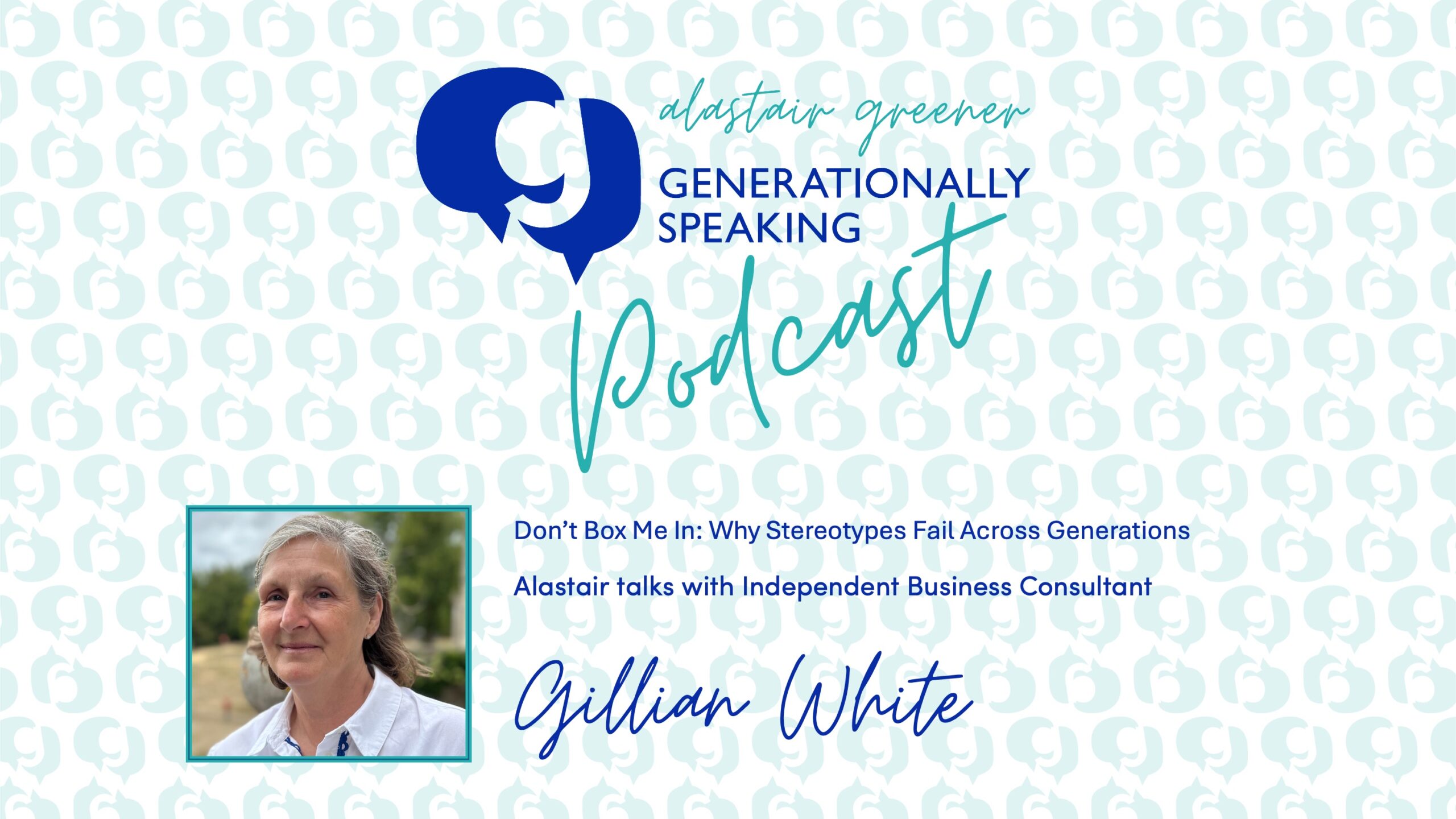
Alastair sits down with Gillian White , an independent consultant in retail engineering by training, and lifelong globetrotter. A self-described Gen X cusper , Gillian pushes back on…
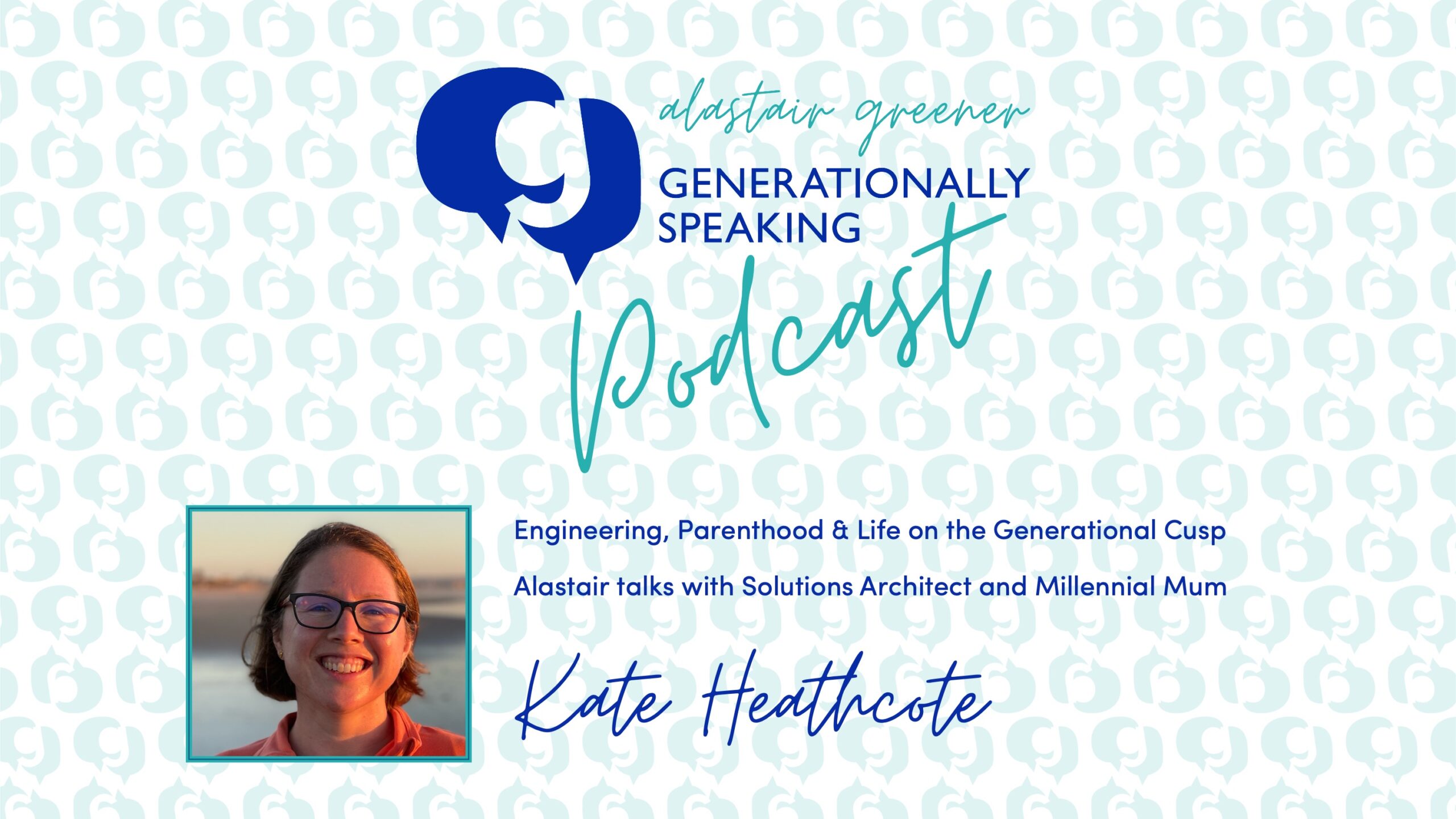
In this episode, Alastair speaks with Kate Heathcote, a solutions architect, engineer, musician, and mother navigating life at the intersection of Gen X independence and Millennial…
George Cairns, founder of Get AI Powers, joins Alastair to cut through the noise around AI and explain what “agentic” systems really are: tools that can carry out computer-based work…
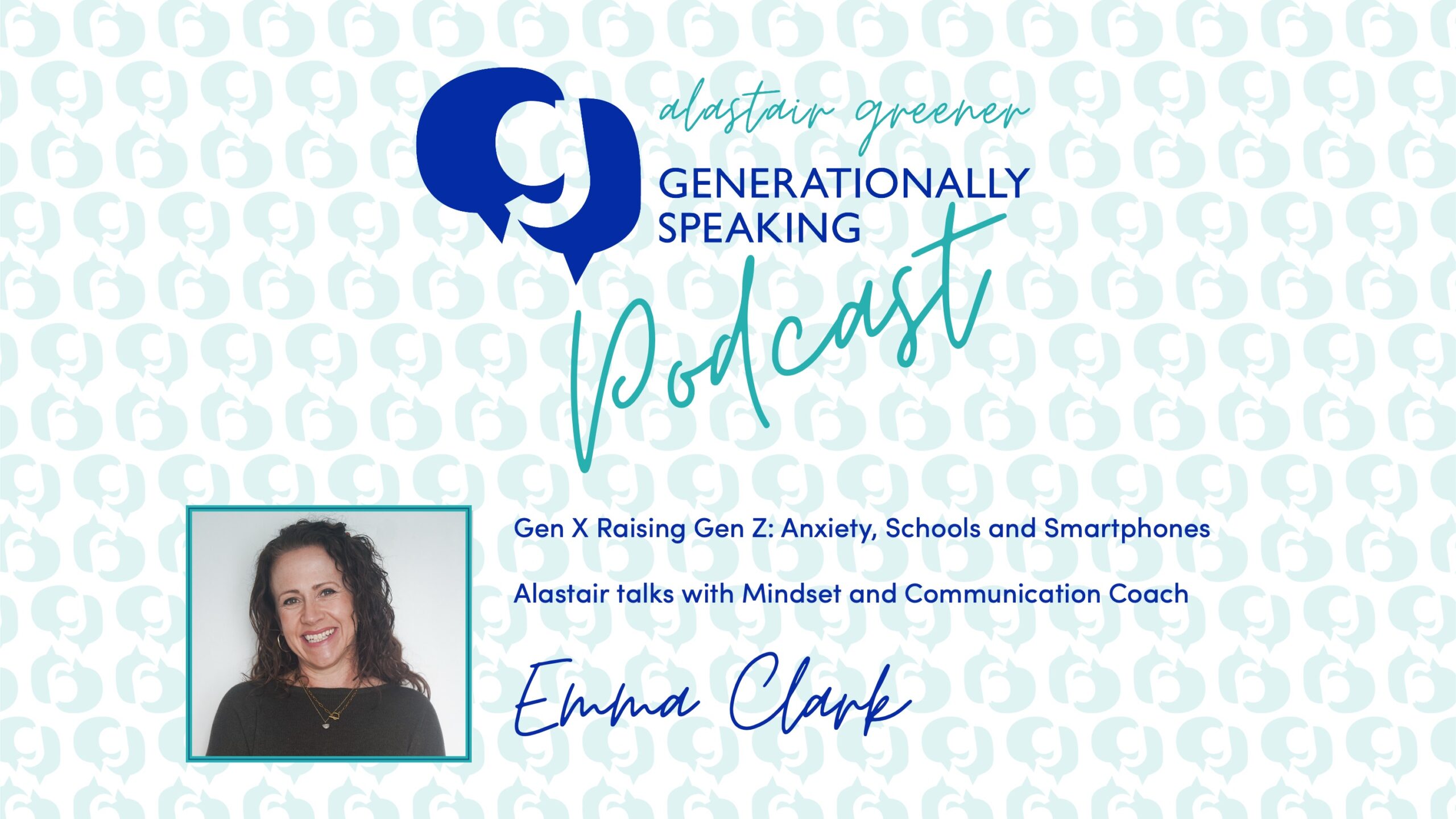
In this episode Emma Clark joins Alastair live from Australia to explore rising anxiety in schools, generational differences in parenting, and the reality behind Australia’s under-16…