Are you a carent? The hidden caring load across the generations
Home › News › Are you a carent? The hidden caring load across the generations
Alastair Greener FPSAGenerational communication expert, author and President of the PSA UK and Ireland 2026Published 8 October 2026 · 5 min read
A carent is someone who cares for an ageing parent while holding down a job, often with children at home too. Carers UK says nearly 3 million people in the UK balance unpaid care with paid work, and the 2021 Census found the biggest proportion of carers in England and Wales among 55 to 59 year olds. Younger generations care too, so support at work should start with listening to each person.
A carent is an adult who cares for an ageing parent while holding down a job, and often while raising children too. There are nearly 3 million people in the UK balancing unpaid care with paid employment, according to Carers UK, and the 2021 Census found the biggest proportion of carers in England and Wales among people aged 55 to 59. Every generation carries some of this load, which is why assumptions based on age let people down.
What is a carent?
We love creating new words to label people, and "carents" is a good example: adults who care for ageing parents while juggling work. It mostly applies to Gen X and Baby Boomers. The 55 to 59 year olds at the 2021 Census were born in the early to mid 1960s, the youngest Baby Boomers and the oldest of Gen X.
The load does not fall evenly. Carers UK notes that 59% of unpaid carers in England and Wales are women. DWP figures published in September 2026 found that, among economically inactive 50 to 64 year olds, women (16.5%) were twice as likely as men (7.4%) to give looking after home or family as the main reason.
Many carents are also "sandwich carers", looking after older relatives and dependent children at once. An ONS analysis of sandwich carers, published in January 2019 using data from 2016 to 2017, put their number at more than 1.3 million in the UK, 62% of them women and more than 72% aged 35 to 54.
5.8 millionunpaid carers in the UK, according to the 2021 CensusCarers UK
1.1 millionpeople had left employment to care in the past two years, according to polling in 2026Carers UK
120,000young carers aged 5 to 17 in England at the 2021 CensusCarers Trust
Why do assumptions about carers get it wrong?
It's easy to make assumptions about carents: "They're just doing their duty", "They've got it under control" or, worse, "That's what happens when you live too far away". The reality is far more complex.
One Gen X woman, interviewed about caring for her elderly father in another city while running her own business, described it as running two households. Emotionally and logistically, it was overwhelming.
The cost shows in the figures. Carers UK polling in 2026 found that 1.1 million people had left employment to care in the previous two years. The Centre for Ageing Better's Tale of Two 60s report, published in September 2026, found that people in their 60s in financial insecurity are "more than three times as likely to be caring as their primary activity" as their financially secure peers.
Is caring only a Gen X and Baby Boomer issue?
No. Younger generations often face stereotypes about being self-focused or disengaged, yet many Gen Zs and Millennials are already caring for grandparents or stepping in for parents who can't. The 2021 Census counted approximately 120,000 young carers aged 5 to 17 in England and 8,200 in Wales, according to Carers Trust. Those children belong to Gen Z and Gen Alpha, and by 2026 the oldest of them are in their twenties.
This is why blanket assumptions don't work, especially in the workplace. For HR leaders and managers, the answer is to personalise your approach. Behind every employee is a story you may not see, and it rarely fits neatly into a generational label.
Start with a private conversation. Ask each person, in a one-to-one, whether anything outside work affects when or how they can work, and make it easy to say yes.
Make the rights easy to use. Since 6 April 2024, employees in England, Scotland and Wales have been entitled to up to one week of unpaid carer's leave every 12 months from their first day, under the Carer's Leave Act. Gov.uk says the person cared for can have "care needs because of their old age", and all employees can ask for flexible working from their first day in a job. Publish how both work, and let people take carer's leave in half days for appointments.
Adapt how you communicate. One respondent aged 60 to 69 in our 2024 survey pointed out that people with "family caring duties" cannot always answer the phone, and that leaving a message in other ways is more helpful.
Support shouldn't hinge on age or assumptions. It should rest on listening, empathy and flexibility. So my message, yet again, is to stop stereotyping and start personalising. Are you a carent, or do you manage one?
Frequently asked questions
What is a carent?
A carent is an adult who cares for an ageing parent while working, often while raising children too. The word mostly describes Gen X and Baby Boomers: at the 2021 Census, the biggest proportion of carers in England and Wales was aged 55 to 59. Many carents are also sandwich carers, looking after older relatives and dependent children at the same time.
How many people in the UK combine work and unpaid care?
Nearly 3 million, according to Carers UK, which cites census data. Carers UK puts the total number of unpaid carers in the UK at 5.8 million, based on the 2021 Census, and its 2026 polling found that 1.1 million people had left employment to care in the previous two years. 59% of unpaid carers in England and Wales are women.
What is carer's leave?
Since 6 April 2024, employees in England, Scotland and Wales have been entitled to up to one week of unpaid carer's leave every 12 months, from their first day in a job. It can be taken as a whole week, single days or half days, to give or arrange care for a dependant with a long-term care need, including care needs because of old age.
What is the sandwich generation?
Sandwich carers look after sick, disabled or older relatives and dependent children at the same time. ONS analysis published in January 2019, using data from 2016 to 2017, estimated more than 1.3 million sandwich carers in the UK. 62% were women, and more than 72% were aged 35 to 54.
Talk to Alastair about workshops and consultancy on communicating across the generations at work.
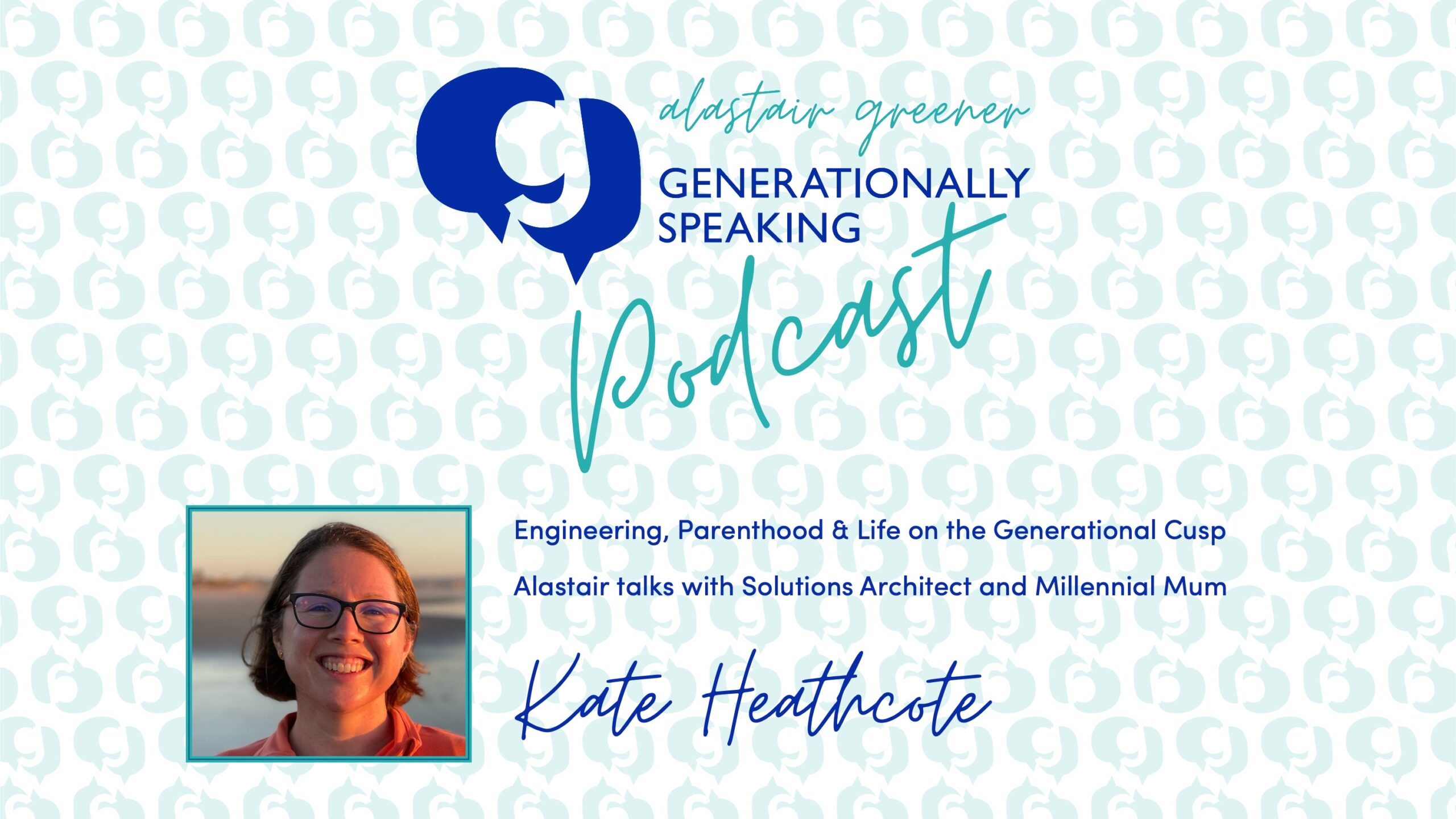
In this episode, Alastair speaks with Kate Heathcote, a solutions architect, engineer, musician, and mother navigating life at the intersection of Gen X independence and Millennial…
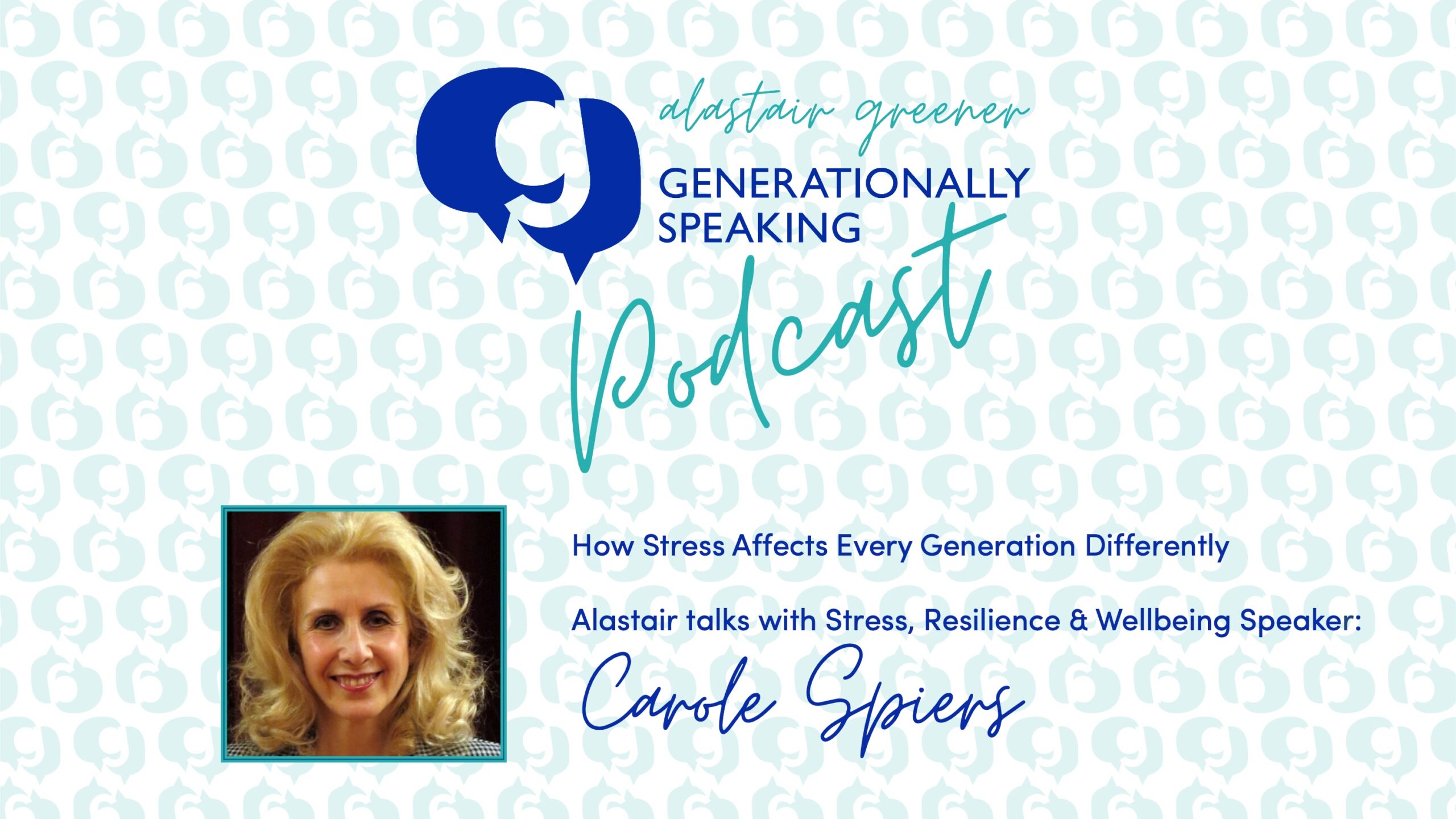
In this episode, Alastair talks to Carole Spiers , an internationally recognized stress management guru and author, and they discuss how each generation experiences and copes with…
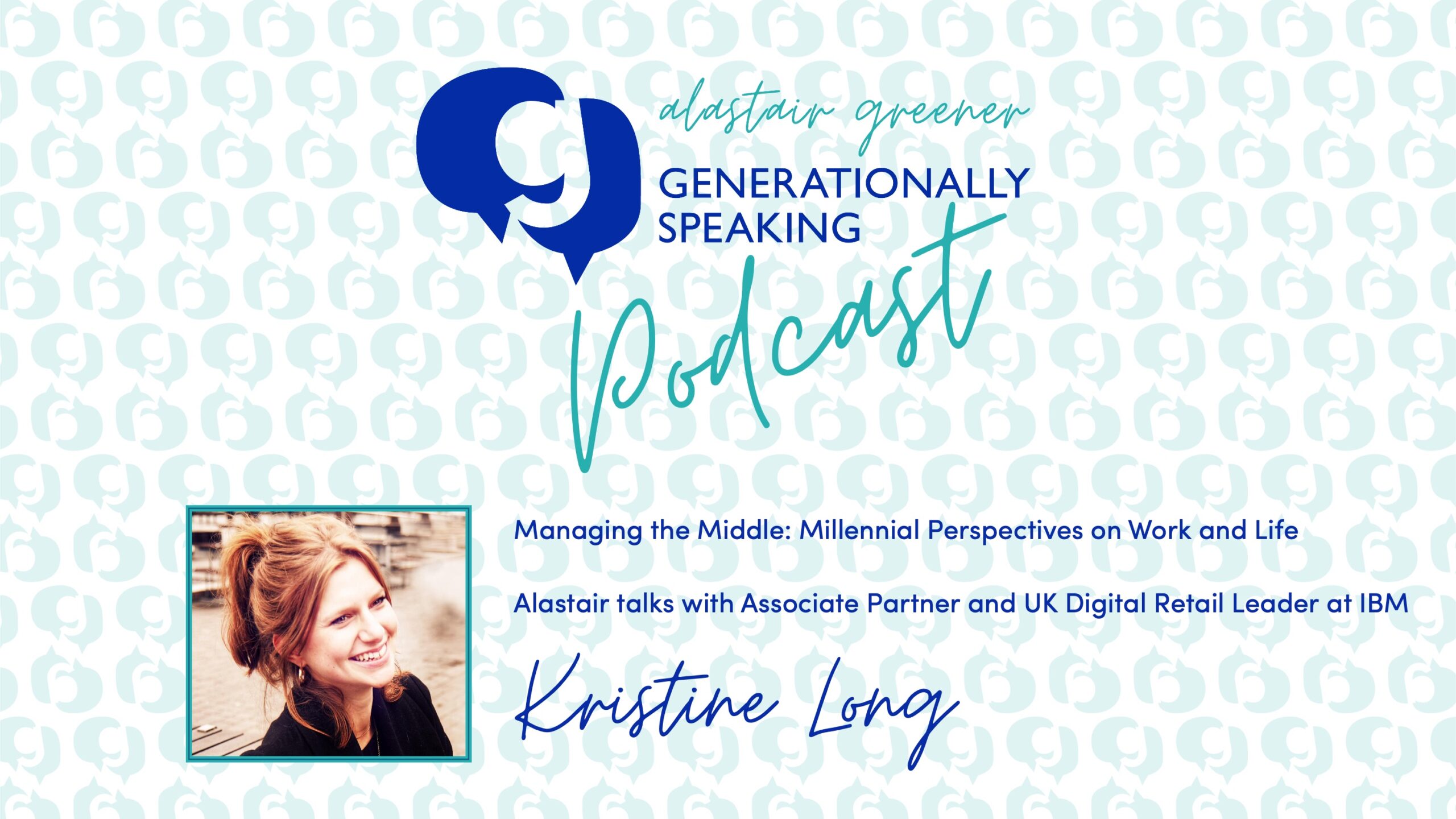
In this honest and reflective episode, Alastair speaks with Kristine Long, a senior leader at IBM with a decade-long career across London and New York. Kristine explores what it means…
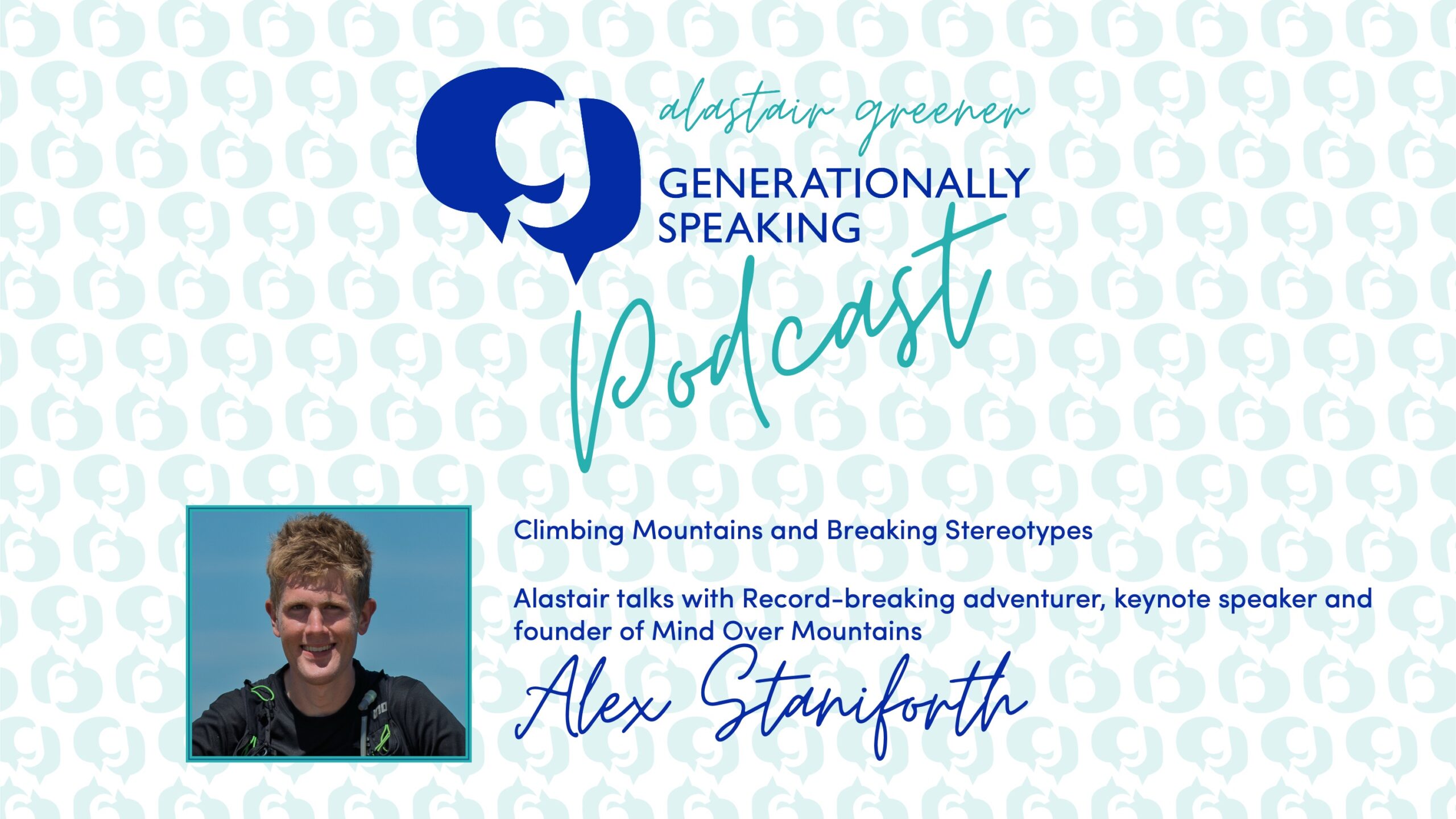
In this powerful conversation, Alastair speaks to Alex Staniforth, record-breaking ultra-endurance athlete, speaker, and founder of mental health charity Mind Over Mountains. Now 30…