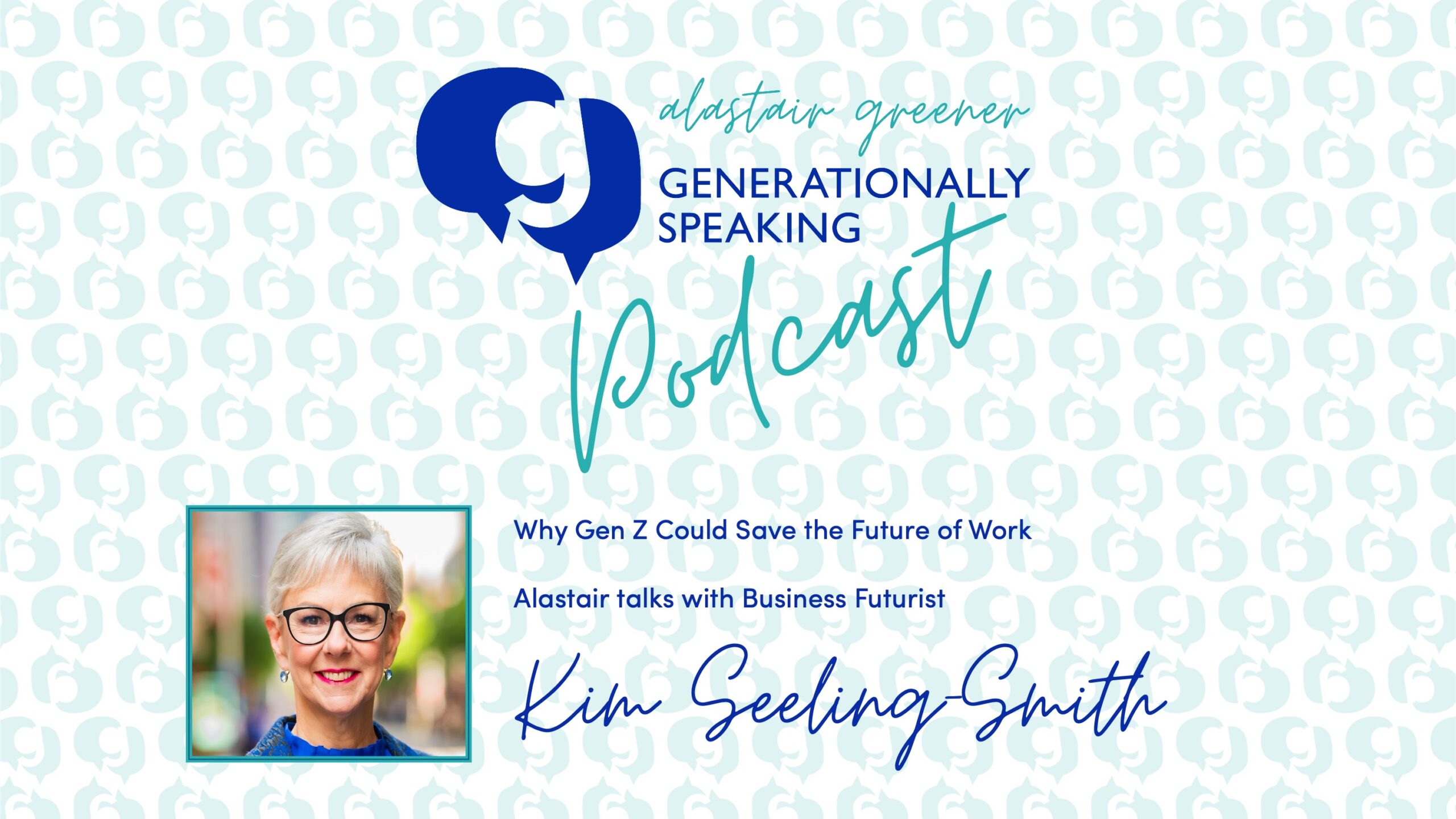
Kim Seeling Smith: Why Gen Z Could Save the Future of Work
In this energising episode, Kim Seeling Smith, future-of-work strategist and founder of Ignite Global, joins Alastair to unpack what younger generations want from their careers, and…

Article

Gen Z are asking for leadership that is more human: curious, empathetic and clear about how each person likes to work. Deloitte's 2026 Gen Z and Millennial Survey found 84% of UK Gen Z interested in leadership roles, yet only 5% named leadership as their primary career goal. Alastair Greener shares what a Deloitte and Leaders Club event taught him and five habits any leader can borrow.
Leaders can learn from Gen Z how to make leadership more human: more curious, more empathetic and clearer about how each person likes to work. Gen Z are not turning their backs on leadership either. Deloitte's 2026 Gen Z and Millennial Survey found 84% of UK Gen Z interested in pursuing leadership roles at some point in their careers, although only 5% said it was their primary career goal.
In October 2025 I attended an event hosted by Deloitte and The Leaders Club that asked exactly this: what can we learn from Generation Z about leadership that will help organisations succeed into the 2030s and beyond? I wrote about it at the time, and I left feeling optimistic.
It was a fascinating mix of data, insight and open conversation, with a very mixed panel moderated by Baroness Dido Harding. We often hear Generation Z described as "the strawberry generation", fragile and easily bruised. As Carl Cardone from Mentimeter wittily pointed out, strawberries are also fresh and juicy. Gen Z may process the world differently, but their emotional awareness and openness bring colour and vitality to workplaces that need both.
One theme stood out all evening: this generation is asking for leadership that is more human.
Deloitte's Emma Cooper shared the idea of a "manual of me": a practical tool in which each team member sets out their preferred styles of communication and collaboration. It is simple but powerful, and it sits right alongside what I say in my book: when we understand each other better, we work together better.
A good one fits on a page. It covers how you like to receive messages and how quickly you reply, when you do your best thinking, how often you want feedback and in what form, and what colleagues should do if you seem quiet. Our research shows why it is worth asking. In our Communication Habits and Preferences 2024 survey, 45% of Gen Z workers prefer weekly performance feedback, while 17% of Baby Boomer workers prefer annual feedback.
The Mentimeter polls during the evening were telling. Asked which leadership qualities Gen Z value most, the audience ranked empathy and psychological safety highest, followed closely by flexibility and autonomy, and authenticity and transparency. A purpose-driven vision also scored strongly, suggesting that Gen Z want freedom and empathy but also want to know why their work matters. Those were the views of the people in the room; the poll was not a representative survey.
Asked what leaders can do to bridge generational divides, the most popular answer by far was to stay curious and understand why, backing up a point Dr Elizabeth Feigin made during the evening about authentic curiosity. The other top answers were communicating like humans, not hierarchies, which echoed Rowan Clarke's point about humanising communication, and including everyone at the table.
Deloitte's 2026 survey also asked what Gen Z see as barriers to leadership. Globally, Gen Z named stress and burnout (50%), excessive responsibility (50%) and concerns about work/life balance (41%).
Afterwards I talked to Seema Jha and her Gen Z colleagues and asked what myth about their generation they would like to bust. The thoughts that came back were: "We're not lazy. We're not too sensitive. We're ambitious and keen to learn." They were also surprised by some of the poll results, asking: "Is that what they think of us?" That blend of humility and drive could be exactly what leadership in the 2030s needs: a move away from command-and-control and towards connect-and-collaborate.
Ruby Woodward was a 17-year-old A-level student when she joined me for Gen Z, grades and giving back in December 2025. She was raising money for children's hospices and mentoring younger students, none of which fits the lazy narrative about her generation.
Write a manual of me, and invite your team to do the same. Go first, so people can see it is safe to be candid.
Stay curious before you judge. Natasha Wallace, a conscious leadership expert, suggested asking what has happened to someone that leads them to behave as they do, rather than why they are doing it, in The practical side of self-aware leadership and its impact across generations.
Hold short, human check-ins. Kim Seeling Smith, founder of Ignite Global, described a fifteen-minute check-in in which she asks each team member what is really fuelling or blocking their performance, in Why Gen Z could save the future of work.
Include everyone at the table. Pair younger and older colleagues so learning runs both ways; Kim's point was that reverse mentoring turns assumed gaps into two-way learning. It may not happen on its own, because 71% of Gen Z find it easier to communicate with people closer to their own age. Our guide to reverse mentoring shows how to set it up.
Let Gen Z help shape leadership as well as preparing them for it. They are calling on leaders to facilitate rather than dictate, and to listen rather than lecture. They are showing us that curiosity, empathy and authenticity are success skills.
The closing insights participants shared that evening were simple: "We are not so different between the generations." "Be curious and communicate." "Avoid stereotypes." They echo a core message of my book, that we are framed by our generation, not defined by it. The similarities between generations often outweigh the differences, but we rarely pause long enough to notice. So what assumptions about Gen Z might you need to rethink?
Mostly how to make leadership more human. At a Deloitte and Leaders Club event in October 2025, the audience's top advice for bridging generational divides was to stay curious and understand why, communicate like humans rather than hierarchies, and include everyone at the table. Tools such as a "manual of me" help to put that into practice.
A short document in which each team member explains how they prefer to communicate and collaborate: how they like to receive messages, when they work best, how often they want feedback and what helps when they seem quiet. Deloitte's Emma Cooper shared the idea at a Deloitte and Leaders Club event in October 2025. Leaders can write theirs first to show it is safe to be candid.
Most are interested. Deloitte's 2026 Gen Z and Millennial Survey found 84% of UK Gen Z interested in pursuing leadership roles at some point in their careers, although only 5% called it their primary career goal. Globally, Gen Z named stress and burnout (50%) and excessive responsibility (50%) as barriers to leadership.
Pair them deliberately, through reverse mentoring or mixed project teams, so learning runs both ways. On the Generationally Speaking podcast, Kim Seeling Smith described reverse mentoring as a way to turn assumed gaps into two-way learning. Short, regular conversations and shared manuals of me help too.
Talk to Alastair about bringing generational insight to your leadership team.
Start a conversationIn this energising episode, Kim Seeling Smith, future-of-work strategist and founder of Ignite Global, joins Alastair to unpack what younger generations want from their careers, and…
Alastair welcomes Farzana Parkar, an HR consultant at face2face HR and who describes herself as an Xennial with 15 years’ experience in HR.
In this values-driven episode, Paul Hargreaves, B Corp leader, author, and CEO of Cotswold Fayre, talks with Alastair about how purpose-led businesses are better for people, planet…
In this honest and reflective episode, Alastair speaks with Kristine Long, a senior leader at IBM with a decade-long career across London and New York. Kristine explores what it means…
Invite Alastair to speak at your event
Contact