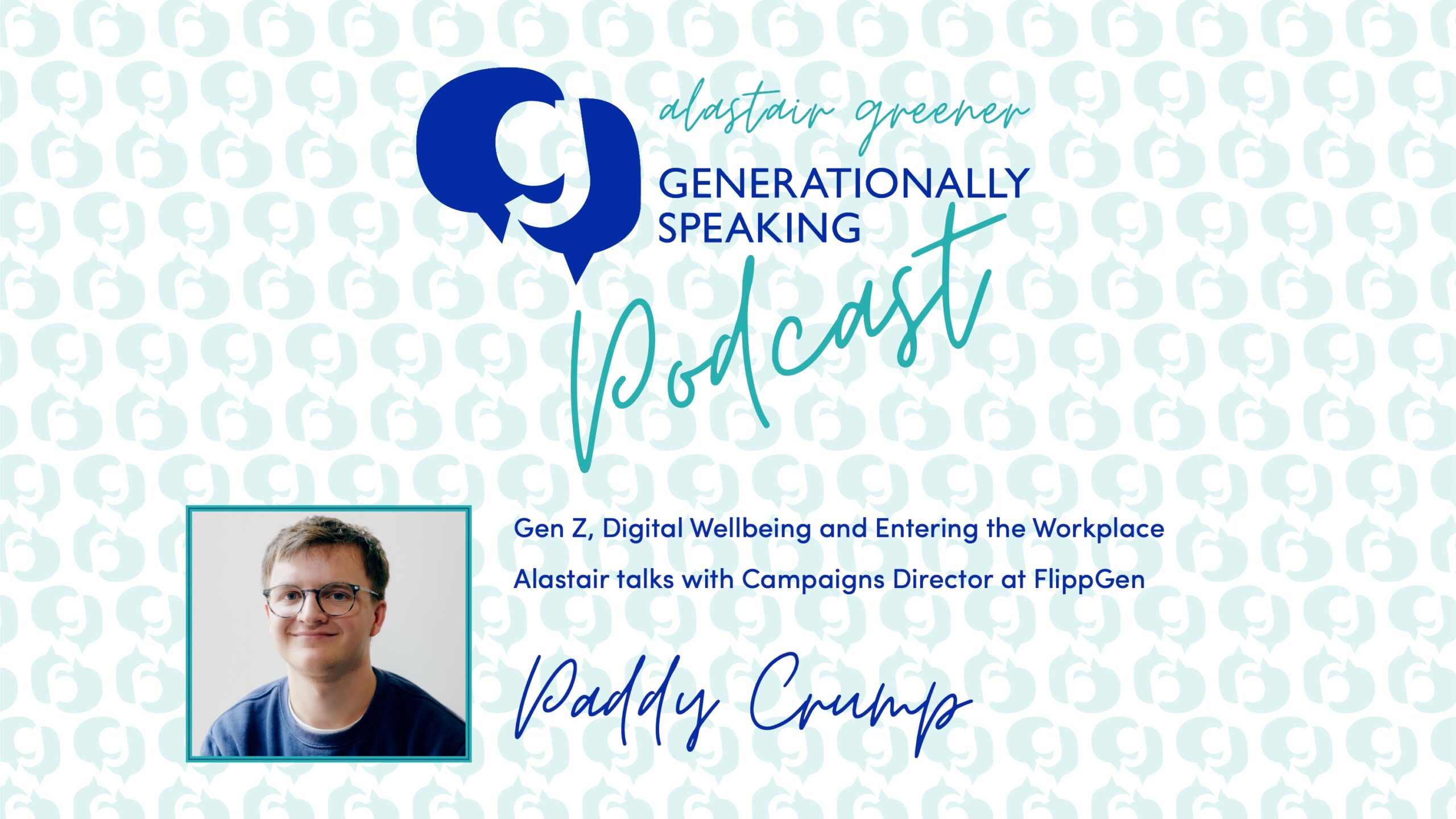
Gen Z, Digital Wellbeing and Entering the Workplace
21-year-old mental health and digital wellbeing campaigner Paddy Crump shares what it’s really like entering the workplace as Gen Z.

Article

Gen Z are the generation most likely to call themselves perfectionists, though fewer than half do. In our 2024 UK survey of 4,067 people, 42% of Gen Z said "I tend to be a perfectionist" described them, against 39% of Millennials, 35% of Gen X, 31% of Baby Boomers and 23% of the Silent Generation. For managers, that points to clear standards, early feedback and making it safe to get things wrong.
Gen Z are the generation most likely to describe themselves as perfectionists, though fewer than half do. In our Communication Habits and Preferences 2024 survey of 4,067 people, 42% of Gen Z said the statement "I tend to be a perfectionist" described them, against 39% of Millennials, 35% of Gen X, 31% of Baby Boomers and 23% of the Silent Generation.
People rated the statement from 0 ("not me at all") to 10 ("absolutely me"), and a score of 8 or more counted as "me". The pattern is clear: the tendency to be a perfectionist falls away with age. It's still a pattern, not a pigeonhole, because fewer than half of Gen Z respondents put themselves in that group.
On their own account, yes, though the gaps between neighbouring generations are small. Here is how each generation scored itself.
| Generation (in 2024) | "I tend to be a perfectionist" describes me | Doesn't describe me |
|---|---|---|
| Gen Z | 42% | 12% |
| Millennials (Gen Y) | 39% | 12% |
| Gen X | 35% | 15% |
| Baby Boomers | 31% | 16% |
| Silent Generation | 23% | 20% |
Source: Communication Habits and Preferences 2024. Base: all respondents aged 16 and over, so the Gen Z figures cover 16 to 27 year olds. "Describes me" means a score of 8 to 10; "doesn't describe me" means 0 to 3.
A related question shows how that can feel. Asked whether "when things go wrong, I am happy to shrug it off and 'put it down to experience'", 25% of Gen Z said that was not them, against 13% of Baby Boomers. For a quarter of Gen Z, mistakes don't simply roll off.
"I just want this to be perfect" is a phrase we hear all the time, in person, on TV and especially on social media, and it's often levelled at Gen Z. But it isn't only their line. In May 2023 I walked past a neighbour's house and saw a couple on their front lawn, both in their sixties, one saying to the other that they just wanted it to be perfect for when the kids and grandchildren arrived. I suspected their grandchildren were probably less concerned about a perfect lawn than they were.
Our survey adds a twist. It asked people whether they tend to be perfectionists themselves, and on that measure Gen Z come out on top. Wanting the house to look perfect for visitors is one thing; feeling that you have to get everything right is another.
The pressure may have been building for decades. Writing in Harvard Business Review in January 2018, the researchers Thomas Curran and Andrew Hill reported that data on 40,000 college students in the UK, the US and Canada from 1989 to 2016 shows perfectionism is on the rise, and that it may be to blame for increasing rates of anxiety and depression among young people.
We are framed by the world we grow up in. In our podcast conversation about the psychology of generations, consultant psychologist Dr Stacy Moore and I explored how our formative years lay the tracks for the rest of our lives. For a generation that grew up with constant online comparison, the pressure to measure up has rarely switched off.
It may help explain the appetite for feedback. 45% of Gen Z workers prefer weekly performance feedback, and our article on how often Gen Z want feedback sets out the full picture. Someone who worries about getting things wrong may well prefer to know early than to find out at an annual review.
It also changes how mistakes land. A perfectionist may sit on a piece of work until it's flawless, or take a small correction as a verdict on them as a person. Curran and Hill's advice to managers, mentors and coaches includes a line worth pinning up: "done is better than perfect".
Practice beats polish. Danny Wang, a Gen Z IT sales professional, went from shy teenager to national-level public speaking champion in under a year, and told me on the podcast about the art of speaking up that he made it his goal "to speak as much as humanly possible".
Define good enough before the work starts. Say what finished looks like, how much time it deserves and which parts matter most.
Ask for early drafts. Agree that a first version comes to you rough, so feedback arrives while it's still cheap to change course.
Separate the work from the person. Keep corrections specific to the task, and say what went well as clearly as what needs fixing.
Share your own mistakes. When a manager talks openly about something they got wrong and what they learned, it becomes safer for everyone else to do the same.
Look at the individual. 31% of Baby Boomers and 23% of the Silent Generation also call themselves perfectionists, so don't assume by age. Make the effort to look at individuals rather than a stereotypical generational characteristic, which is probably wrong anyway. Our guide to Generation Z covers what else the data says about this generation.
It's these misconceptions that cause friction at home and at work. So, what assumptions do people make about your generation that annoy you the most?
They are the generation most likely to say so, though fewer than half do. In our 2024 UK survey, 42% of Gen Z said "I tend to be a perfectionist" described them (a score of 8 to 10 out of 10), against 39% of Millennials, 35% of Gen X, 31% of Baby Boomers and 23% of the Silent Generation.
In our survey it falls with age. Gen Z scored highest (42%) and the Silent Generation lowest (23%), with each older generation less likely to describe itself as a perfectionist. Gen Z were also the most likely to say that shrugging off setbacks is not them: 25%, against 13% of Baby Boomers.
Research by Thomas Curran and Andrew Hill, summarised in Harvard Business Review in January 2018, found perfectionism rising among 40,000 college students in the UK, the US and Canada between 1989 and 2016, and suggested it may be contributing to rising anxiety and depression. The world each generation grows up in shapes the standards it sets itself.
Define what good enough looks like before the work starts, ask for early drafts, keep feedback specific to the task, share your own mistakes and agree how often the person wants feedback. 45% of Gen Z workers in our 2024 survey prefer weekly performance feedback, but ask each person rather than assuming by age.
Explore 64 facts from our own UK research into how the generations communicate and work.
See the statistics21-year-old mental health and digital wellbeing campaigner Paddy Crump shares what it’s really like entering the workplace as Gen Z.
In this episode, Alastair talks to Carole Spiers , an internationally recognized stress management guru and author, and they discuss how each generation experiences and copes with…
In this energising episode, Kim Seeling Smith, future-of-work strategist and founder of Ignite Global, joins Alastair to unpack what younger generations want from their careers, and…
Alastair sits down with Henry Farr , a young entrepreneur navigating the generational expectations that come with running his own business. In this episode, Henry offers a grounded…
Invite Alastair to speak at your event
Contact