
Podcast · Episode 21
Henry Farr: What Gen Z Wants at Work and Why It Matters
Guest: Henry Farr, young entrepreneur. Host: Alastair Greener.
Audio
Video
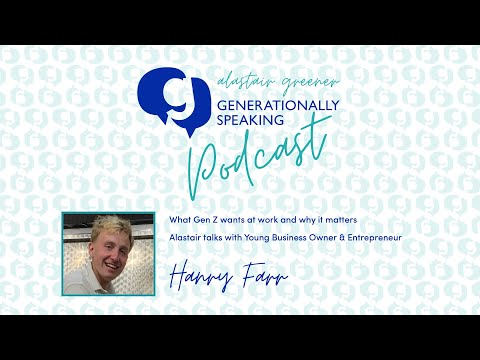
Alastair sits down with Henry Farr , a young entrepreneur navigating the generational expectations that come with running his own business. In this episode, Henry offers a grounded, self-aware view of how Gen Z approaches the workplace, identity, and relationships with older colleagues.
Open about his own learning journey, Henry reflects on what are sometimes unrealistic expectations placed on his generation: to be both assertive and respectful, progressive yet traditional, digital-first but socially sensitive. He shares practical ideas on how workplaces can embrace Gen Z’s curiosity and ambition without patronising them, and how younger workers can better communicate across age gaps.
Henry Farr Takeaways:
- Gen Z values open dialogue, psychological safety, and flexibility
- Bridging the generational divide requires mutual trust and not assumption
- Honest feedback, mentorship, and humour go a long way in Gen Z retention
- The stereotype of Gen Z fragility ignores their adaptability and drive
- Collaboration across generations can be energising rather than threatening
Read the full transcript
Automatically transcribed, so there may be the odd slip.
Alastair Greenerhello and welcome to the Alastair Greener Generationally Speaking podcast where we look at bridging the generation gap. Uh, we like to debunk myths, tackle stereotypes, and share practical tips on how we can build stronger, more intergenerational connections. And today I'm joined by. Entrepreneur, he's a skier. He's so many different things. And one thing I would say, which I think is gonna become clear fairly soon, that he's not typical of his generation. He's a millennial and Gen Z cusper. Uh, no he's not. Oh, God's sake. I'm gonna start that again. I keep on thinking you're 30 Henry. Sorry about that. Sorry, James. I'll start that one again. I'll start from the top as we were near the top anyway. Okay. Hello and welcome to the Alastair Greener Generationally Speaking podcast, where we look at bridging the generation gap by debunking myths, tackling stereotypes, and sharing practical tips on how we can make better, stronger intergenerational connections. Today, joining me is someone who is an entrepreneur. He is a skier. He's a multitude of things as you're about to discover, and he's definitely a. Not a typical Gen ZI think that will come across very quickly, uh, soon. Uh, so Henry, welcome to the podcast.
Henry FarrThank you very much.
Alastair GreenerSo Henry, far, you come from a dynasty of, um, entrepreneurs, really don't you, in terms of your family business and so on. First of all, tell us a little bit more about you, your family, what you do, and, um, we'll come to the stereotypical side a little bit later, but tell us a little bit more about how you see yourself in terms of what you do.
Henry FarrOh, that's a very good question. Um, still figuring that out. Um, no, we are and always have been, um, caterers of one sort or another. Um, it started about a hundred years ago during the first World War. My, um, great-grandfather, um, started a, a cake and coffee stand at Chisel, um, at the army camp. Um, and then they got into amusement rights. So he would work in the morning, do that. He was an engine driver, and then they'd have a steam driven set of carousels. Um, in Farringdon Park in Swindon. Um, and that kind of carried on. They got more into the amusement ride sort of thing until the fifties. Um, and then that's when we got into catering. Um, and yeah, since then it's kind of gone down the generation and, and sort of trickled into me where we are now. Um, and, and that's it really. Uh.
Alastair GreenerYou are definitely not, you are not on the coattails of your family. I mean, you have created, so, so basically you go to festivals, um, with your, um, catering facility doing fish and chips and other things. And you go to multiple different venues and things, but you've built the van yourself. We'll come to that a little bit later on. So you have crafted your own niche in a sense, haven't you?
Henry FarrYeah. I mean, we we're very good at downplaying it. Um. It, it was more out of a necessity. Um, so COVID hit and we were event caterers that had the equipment and um, more importantly, I think had the, had the not, you know, the knowhow as such. And, um, we had nothing to do and luckily became a lorry driver. And you go to all these, these small villages or towns and, and the only thing that was still going were these sort of popups. And that's how we got into that. Uh, and, uh, yeah, we've, we've sort of grown on that. And it started off with a little fish and chip trailer. Um, uh, we outgrew that very quickly. Uh, and then we started on the lowy four years ago. Now I still not, it's, it's not entirely finished, but we don't admit that to the public. Um, and yeah.
Alastair GreenerAnd, and again, we should let you know, we said to you, uh, a Gen Z, but you're 23 years old. You have what I think most people would recognize as a pretty remarkable entrepreneurial spirit in terms of what you do. And I always say on this podcast and in my book and other, other places, but we are very much framed. By the way that we were brought up, whether it be by family, by our age group, and so on, give us an idea of what life was like growing up, because I get the impression that you were part of the business. As soon as you could physically move, you were doing something in the business.
Henry Farrbusiness. Yeah, that's, um, I'd say that's less typical of my family and more typical of people in this industry. So my. My auntie has actually got a photo of my auntie at three years old selling toffee apples on a, um, upside down wooden crate at tame fair back in the late sixties. Um, and so as, as, as soon as you're old enough to, to hand something over or to walk or to talk, then that's it. Um, my grandparents had owned the P at Burnham and Sea, and that's where my summers were spent. And then the, the rest of the, you know, every sort of school holiday or days off or weekends you spent working,
Alastair GreenerDid you always enjoy it or were used of dragged kicking and screaming a bit.
Henry FarrN no, I was, I was, uh, I was very lucky. My brothers didn't enjoy it, but for me, I found a great sense. There's like a thrill, like a heart, like it, it's a legal high as such. Um. Uh, there's, there's nothing better than taking money, especially when you're busy.
Alastair GreenerSo, do you remember your fir, your very first time that you were starting to do that, to sell things and taking money and realizing that that was you, um, making money and therefore it was money you could spend on what you wanted to spend it on?
Henry Farrso my first time would've been, um, it would've been the school fair when I was nine down at Cornwall in Penn Silva. Um, and I asked the PTA if I could have a little table. I've got a photo of it somewhere doing sweets and candy floss and it worked out really well for me 'cause I convinced my grandma that Burnham to buy the Sweetss for me. I borrowed the candy floss machine off my auntie in Swindon and got my dad to drive it down there so it didn't cost me a penny profit wise. I should go back to how I used to be.
Alastair GreenerHow much did you make? Do you remember?
Henry FarrAh, it was 212 pounds.
Alastair GreenerWow. I mean, for a, for a 9-year-old, 212 pounds now, were you allowed to keep that money or did it
Henry FarrYeah, yeah, yeah. No, I mean, we've always been very lucky. Um, so we've never, we've never been paid for the work we've done for the family, um, whether that be an hour or a hundred hours, but whatever then you earn is yours. Simple as that. Um, and you are always encouraged to do something or do this or do that. And when I was 13, I started to regularly do the markets extra race course, um, with Handmade Fudge. And then it was a pick and mix stall, and it caught, it started as a little 10 foot gazebo. And then by the time I finished that at 15, it was a 40 foot market stall. Um, doing everything and anything you could think of,
Alastair Greenermean, this isn't the sort of typical story we hear of, of someone who's 23 today. Is it? So what was it like growing up amongst your peers? You know, everybody else at school who I can imagine were somewhat different to you. They weren't out there. Um, selling, making money and being entrepreneurial.
Henry FarrIt's a trade off, isn't it? Because where on weekends they would go out and do something, I'd go out and work. Um, so you, you definitely have to look at the side of, it's fantastic for me, for where I am now in life. But you do, something has to give so you sacrifice. Um, I definitely look back and you did sacrifice a lot of time with friends or peers. Uh, but I don't regret it because I'm better off for it now. I.
Alastair GreenerI mean, and, and again, that's remarkably forward thinking for, you know, a, a 13, 14, 15 year olds to do that. And you said your brothers didn't follow the family line, so what do you think made you different to your brothers and other family members who didn't continue the business?
Henry FarrSo it's an outlook on life, isn't it? It's what you want, it's what you wanna end up with. Um, my older brothers, for better or for worse, are content in the moment. Um, and my grandfather said something to me when I was young and it stuck with me. To live, to work like nobody else when you're young. And then you could live like nobody else when you're old. Um,
Alastair GreenerWise words, brilliant.
Henry Farrwhere my brothers is such, and, and other family members, they, you know, if they've got a five in their hand, they'll spend it.
Alastair GreenerAnd how do they, how do they view you now as someone who's, you know, you really have achieved a lot at, at a remarkably young age, and you continue to evolve and, and work on what you do?
Henry Farruh, they all say I work too hard. I say I don't work enough. Uh, there's, yeah. I mean, again, it all just comes, it all comes down to goals and aspirations, doesn't it? Because if you know what you want and you can, you can you say, I want to achieve this by that age while still maintaining a social life. Um. That's great. And I think they were, you know, I had a goal and, and they're just, their, their, their goal was different.
Alastair GreenerDo you think a lot of how you became was as a result of the environment in which you brought it up in? Or do you think there was a something inside you that made you want to do what you've done?
Henry FarrI'd say it was a fantastic coalition of the both, um, my environment. Gave me the opportunity that other upbringings wouldn't have done. Um, but I've always wanted to do something. I've always wanted to give that a try or do this or, um, try, try the next step where,
Alastair GreenerI was gonna say, you, you, you built your own truck. I mean, that is, you know, you are not an engineer by background. I don't think so yet. It's this remarkable, um, achievement and, and it's, it's, it's really impressive.
Henry FarrEducation wise, I definitely, um, I left school at 16, which sometimes I regret. I would've liked to maybe have got a higher education, but formal qualifications wise, GCSEs, and that's it. Um, and when it came to the truck, it was necessity, more than one. I knew I needed something bigger. All the professional builders in the country, you know, they, they're not doing it for fun. So for what it cost me to build you, you'd have to pay three or four times the amount to get it done. There was a trade off for that. Um, to try and build it and work in another one was quite hard because you, you, you, it's a balance for time all the time.
Alastair GreenerAnd do, did you learn through the, the modern way IE watching YouTube videos and things as opposed to manuals?
Henry FarrThere's not a, an amazing amount of YouTube videos on that sort of thing, actually. Um, but, and this is an incredibly vain thing to say, but I've been blessed with common sense where it's not rocket science. The hard, the, the biggest lie they tell you is it's not that hard 'cause it really isn't. Um, and it's, it's just figuring out that, you know, you look at schematics on how certain things are made and then you say, right, so I need that and I need that, and I need that. Um, and, and some actually, I, I just, not to carry on, but somebody said something to me once that 80% of building anything is measuring it and cutting it to what you measured and then putting it together. And I, I know that sounds quite weird, but that, that's literally it.
Alastair GreenerDid you go down the route of um, I always like the thing, carpenters will always say, measure twice, cut once.
Henry Farronce. Oh, in my case, measure 57 times and still doubt yourself.
Alastair GreenerOkay, so that, that's a really interesting thing. You don't seem to be someone who lacks in confidence. And there are many people who would say that Gen Z don't always have a lot of confidence. Um, are you, are you confident or is this all a bit of bravado?
Henry Farrit's a really weird thing, isn't it? Because sometimes in social circles with people, I don't know, I can be quite shy, but the second you are. I've always had this thing. The second I'm on a platform or, or selling food or any of that, it just goes away magically. Um, and I, I, I actually, if there's a situation where I'm not as confident about, I'll just pretend I'm trying to sell you something. Um, and it makes it, it's a lot easier.
Alastair GreenerOkay, so you, we, we've established you are not a typical Gen Z in so many different ways. In what way would you say you are a typical Gen Z? What are the sort of things that you do, do now with your mates when you do get a bit of time off, which you don't obviously get much, but what do you, do you think actually that that's pretty typical of my generation.
Henry Farruh, I dunno if it's typical of my generation or all gen, well, the last hun, 60 years or so, but skiing, skiing is about, I tend to. About three weekends off in the summer. Um, and I, I've got, I grew up in Cornwall, so I go down to Cornwall, uh, and I've got a friend and he's got a boat and we'll just mess about for the weekends. Um, but I do always have a month off in the winter and go skiing.
Alastair GreenerAnd I'm gonna come to skiing in a moment because that, again, I bet you're probably the first member of your family who's a regular skier because it, it, it, again, people who are, anything to do with catering just don't get that kind of time. But just coming back a, a second to being a typical Gen Z, how are you with social media and things like that? Is that how you get a lot of your business? Are you exploiting. You know that knowledge that younger people have of the way that algorithms work and social media and so on.
Henry Farron. Not as much as I should do actually. That, that's one of my biggest flaws is I don't market myself enough or my business. Um, I try and stay away from social media personally as much as possible because comparison is the faith of all joy. Uh, and it can be quite hard when you are. You know, working on weekends and days and all of a sudden you open Facebook and your friends are here or there or, or doing something. So I always find it's better not to judge your life on others. So I personally try and stay away from social media. Advertising wise, it has been the best gift and it's the cheapest and, and, and the readily available way to advertise yourself. Um. And that 90% of the population are on Facebook or Instagram or Twitter. So the reach you've got now is substantially greater than what you would've had 30 years ago.
Alastair GreenerBut also can your message get lost in all of that noise?
Henry FarrIt can do quite easily. Um, especially, you know, in my industry now where it's becoming overly populated because people think it's an easier way to earn. A quick buck. know, all of a sudden when I started five years ago, going around the villages, for instance, or around the towns, there was only a couple of people that did what I did in the Wilshire area. Um, now I can list a name of about 30. So you've always gotta try and make sure that you are out there and you are known as the one to go for, for instance.
Alastair GreenerBut you've got a reputation. How strongly do you work at maintaining that reputation?
Henry FarrOh, that's all I do now that that is, that is your life. So many times people have said to me, oh, do you want to get another van or get bigger? And that is my biggest problem that I face at the moment, is to find someone that could do what I do. And not to sound vain, but to carry on at the level that I do it. Um, because
Alastair GreenerI think there's separate from that.
Henry Farrit only takes, that's, that's the biggest problem with catering. It's one of the hardest industries to scale. I've always said if I was to start again, I wouldn't pick the same industry, because it is, it's a lot. It's, it's, it's, it's, nowadays something to do with social media or technology is easier to outsource and scale. Where catering, I couldn't say. They go, Alastair, there's a fire, there's some fish. Um. I look forward to it.
Alastair GreenerLet's get onto your, your pastime. You, you, you sat there in a, uh, in a, in what looks like a gaming chair, and you said, just before we started recording, that you, you obviously uses, you use it for gaming and for business. So in, in that respect, do you spend much time gaming
Henry FarrI used,
Alastair Greenernot enough time?
Henry Farruh, when I was 15, 16, I was a victim of not, I say a victim of that. Um. In the sort of down season in the winter, I spent a tremendous amount of time that I'm quite ashamed of gaming. Uh, 'cause you know, my generation is such, we don't go out as much or go to the pub on a Friday or a Saturday. You, you find yourself in a room, in a dark room with a screen. Nowadays, not so much for better or for worse.
Alastair GreenerOkay. But what you do spend your time doing in the winter is you go skiing. How on earth did someone like you get in into skiing? And I, I only say someone like you purely because I can't imagine you were exposed to that. You weren't a family that went off skiing every winter because you were working so hard. So how did you get into it?
Henry FarrYes and no. So we didn't go skiing every winter, but I'm very, very fortunate. My auntie. Uh, who for family reasons I moved in with when I was 16. Um, I've been very fortunate. She ever since the age of, I think 22, has gone consecutively every year for about six months, uh, whether it be to Vail or to Beaver Creek. And she's got friends over there. She skied, uh, with the World Ski Championship with the women's downhill. With the men's downhill. Course prepping. Um, she's been a team leader, uh, and she also did a stint of instructing and her fiance is a phenomenal ski instructor. So four years ago I went to stay with them for six weeks in Park City in Utah. And yeah, that's first day fell in love with it and that was it.
Alastair GreenerWell, I mean, at the end of the day when you have good days, bad days, especially those bad days, I can imagine the thought of you're saving up for your next ski trip, you know, makes it a little bit better.
Henry FarrIt does indeed. You've just, you just remember that view. Uh, and to someone that understands the feeling of a good day skiing, it's, it's a fantastic thing to look forward to.
Alastair GreenerMate, are you a skier or boarder
Henry Farrskier. Skier.
Alastair Greenernot tempted into boarding.
Henry FarrI like my pelvis the way it is.
Alastair GreenerWell, I have to say as someone who is a skier, but that's probably more generational because that's all that was around when I was younger and I wasn't gonna learn new tricks. I was looking reasonably okay on a pair of skis. I didn't wanna look a complete idiot, uh, trying boarding. But, uh, it's, it's interesting that again, you seem just remarkably grounded. And, you know, you, you talked about common sense earlier on, I, I, is that again from the family? Um, your, you know, everybody in, in the workplace that, that's kinda like what you did.
Henry FarrYeah. So the, the issue with our industry is you have to be everything. You have to be able to, um, look after generators, look after vehicles, keep on top of the plumbing side of thing, because if you are at an event, you've got to be able to fix things as they come up. So you have no choice. But to be quite practical and logical with everything that comes your way, um, which is mistaken for common sense nowadays.
Alastair GreenerYeah.
Henry Farrbecause you've gotta deal with it. You can't, if you are at a busy festival and you've got a queue of people and something goes wrong, you're not gonna call a plumber and wait for two days.
Alastair GreenerYeah. Makes, makes perfect sense. And I, I, I wanna move slightly segue, if that's okay, intergenerational things, because we've, we've talked a lot about how you are clearly not typical of your generation in so many ways. How do you get on with people, first of all, within your own generation? I mean, do you feel, do you find you have a lot of common ground and actually just slip into those conversations? It's all fine, or, or actually, do you feel yourself being a little bit different?
Henry FarrAnd you definitely feel it. I have. I've always said, I've always found it easier to have a conversation. Please don't take this in the wrong way with somebody your age than I do my own age because, uh, it's, it's a different outlook on life and it's a different, uh, set of values. I've. I've never been the one to go out on the weekend and get drunk or, or, you know, something else. We were, I was always taught when I was young. If you've gotta take something to enjoy the company you're with, then you're with the wrong company. And, uh, I would rather sit down and have a good conversation with someone about something sensible than talk nonsense, you know, uh, drunk or high or something like that.
Alastair GreenerFair enough. I mean, yeah, I mean, very wise words. I love all your quotes. They're brilliant. And some of them clearly come from family and others from other places. So are, are you kinda like into the, you know, do you ever read or, or listen to the book, these motivational books and, uh, business gurus and people like that?
Henry FarrI wouldn't say motivational as such, um, but. I've read a number of, you know, finance books. Business books, um, there's, and history. I'm a fantastic love of history. I feel that we are destined to, uh, the, the only way we can learn is to, uh, try and not make the mistakes of our past,
Alastair GreenerAbsolutely. And.
Henry Farrwe inevitably do.
Alastair GreenerYes, exactly. And let's, let's talk a little bit, you said you connect better with, um, older generations and so on. Do you think a lot of that comes down to, again, your background? Because you come from a, a very multi-generational industry by virtue of what your family have had as their long-term careers and things. You are literally, you know, you're living together, you're working together. Everything is just, everyone there involved. I I is, is that something that has framed your thinking towards older people? Because you, you were always around much older people.
Henry FarrI, I've always been told I've got an old head on young shoulders. Um, whether it's, I dunno whether it's me or whether it's the industry I, you don't, it, it's a very good question actually, that I think needs a little bit more time to think about because, um, yeah, I, I've never, I've never really given it much thought. It's always just been what it is. And
Alastair GreenerUm, and what about generational bias? Because people, I can imagine there are going to be situations where you turn up and they look at you and think, yeah. And especially when you are starting out, you know, five years ago there would've been people looking and say, yeah, who's this young whipper snapper? What, what's he gonna show? A, did that happen? And B, if it did, how did you deal with it?
Henry FarrUsually with comedy because you, you say jump out the cab of a lowy and somebody goes, where's your dad? Or Where's Mr. Far? That's always that, that's always my favorite one is Where's Mr. Far? Where's the gentleman I spoke to on the telephone? Um, a a and I mean, not, not so much now, but I used to, when I was 18, it was always a fantastic look. You'd, you'd capture the look on somebody's face. When, uh, you introduce yourself a festival or a show, um, and they're like, oh, right, okay. You're not what expected. Um, but then you just, yeah, you just try your best and you, you prove you can do the job. And it's as simple as that. I don't think age should be a boundary, uh, or a limit, and anybody can do what we do. Uh, it's just determination.
Alastair GreenerDid it ever bother you when people were made judgements about your age?
Henry FarrI took it as an opportunity to prove them wrong.
Alastair GreenerYeah. I forget who it was, who said the best revenge is massive success,
Henry FarrThink it was Steve Jobs.
Alastair GreenerWell, if he didn't say it, he certainly proved it. So what about old, older people? Clearly you, you get on with them, you connect with them, and again, there's a multitude of reasons. Um, for that. Do you ever find yourself in a situation where actually it is a challenge, um, dealing with, with, with older people, either because of their preconceptions or just because they are like they are.
Henry Farrstubbornness is a wonderful thing. Um. I think the older you get, you either go two ways, you get set in your way or you realize that you don't actually know as much as you thought you did when you were 20 or 18. Um, and depending on who you're dealing with. So some, some people when they get older, can become more placid and, you know, easier. Some people go the complete other way. Um. Yeah, and stubbornness is a fantastic thing to deal with. You do meet people that either they believe they're right or they don't wanna be proven wrong,
Alastair GreenerMm-hmm.
Henry Farruh, in which case you just smile and agree and then do the complete opposite afterwards.
Alastair GreenerYeah. Well, they, exactly. So how have you changed as you've got older, um, you know, from that 18-year-old to now, how, how have you changed? Adapted, especially when you are interacting with others,
Henry Farrothers, become less intelligent.
Alastair Greeneryou.
Henry FarrIt feels that way, doesn't it? The older you get, it's, it's, it's also a fantastic saying, isn't it? The older you get, the more you realize, the less you know. Um, and that is certainly true. Uh, when I was 18, I thought I was gonna take over the world, and that hasn't been the case yet. So you find Yes. Um, I do think your, your, your view changes as you get older, though. What ma what, what, what, what matters, changes. Um, but yeah, I, it's, it's, it's a fantastic thing, age and dealing with dealing with older people. Um, generally I find it's actually easier.
Alastair GreenerWhy? Why do you think that is?
Henry Farrthat is? Because you find them more level-headed, especially a, a sort of, they tend to get less stressed. That's the best way to put it. When you generally meet people in my industry, that's my age, they're, they haven't developed the correct coping mechanisms to deal with stress. Um, it, you know, when things go wrong and you find that, I've definitely learned as I've got older that it's never as bad as you think it's gonna be. Half of the problems go away. Even, you know, you overthink these sort of things. Uh, and, and that that is the actual, yeah, that's, that's the biggest outtake on that I would say is that. Most things can be sorted out by taking a step back, thinking about it logically, and then dealing with a situation.
Alastair GreenerWhat about the future? What are your aspirations right now? And we accept that everything changes all the time, but here and now, how do you see the future
Henry Farrfuture?
Alastair Greenerfor you, for Henry Farr?
Henry FarrI wouldn't say an easier life, but I think you've always gotta work on a quality of life. And the only thing that's changed in as a shift in me from say when I was 15 or 16, is what, what I value when I was 15 or 16 you, or at 17 or what? Whenever I found myself chasing money all the time. And when I got to about 20, I realized that money isn't anything. Money is just a tool to be used and you can chase it and chase it and it doesn't make your life any easier. In fact, it makes it worse. They were a fantastic number of super successful and wealthy people I know that are miserably happy, miserably unhappy soy, and there are fantastic people I know that I wouldn't say are, um. Under the poverty line because that's something we've got far too much of in this country. But I would say at a comfortable level where money isn't their goal and they live a much better life.
Alastair GreenerYou know, I feel like stopping the interview there 'cause that was such fantastic wise words, but I haven't finished yet. Um, I wanna ask you a little bit about, you know, you, you've, you have got some very wise words and I can see you almost being quoted now a little bit like the quotes you've been using earlier on. But what advice would. Do you give a, first of all, do you give advice to people your own age and youngsters generally? And if you do, what do you say? What advice do you give them, um, to, for them to look towards the future and maybe to aspire to being you or maybe just to be successful in life, whatever path they take.
Henry FarrI'm not, I'm, you know, I'm not gonna wish anything as bad as aspiring to being me on anybody, crikey. Um, but I think the older I've got that you, the only piece of advice I do give people is, is life is definitely what you make it. Um, not to carry on with the quotes, but the quality of your thoughts is the quality of your life. If, if you are determined to be miserably unhappy, then you always will be. Um, I have helped a few people out and it's fantastic to see because I will help anybody that is willing to give it a go. But you meet some people that have, um, what I would call a defeatist statute where they're not gonna win no matter what they do. So what's the point in trying? And unfortunately, you can't help someone that doesn't actually want to be helped. And the only thing I would, the is just, is just go, is just do it. It's just do it. Everything I've done, um, which is not a lot in the grand scheme of things is because I've just gone and done it. Half of the,
Alastair Greenera good slogan for someone.
Henry Farryes, half of the half of the job is starting, half of anything is just, is just going and doing it.
Alastair GreenerYou are clearly really effective at communicating with older people. A lot of Gen Z struggle to communicate with older people for whatever reason. What advice do you have in that respect for younger generations?
Henry Farrsometimes. I've seen it where. We were always taught, we, we, I was always brought up, um, that you treat everybody with the equal. You, you, you treat everybody how you would like to be treated. And I definitely see among certain people of my age, a lack of respect would be, want for a better word, um, towards somebody, you know. I do, I do believe that people as they get older, are deserving of slightly more respect. Um, in the way that you talk to them or the way that you communicate, um, and of their, you know, and of their opinion, because that is, they've been around longer, so they know a little bit more than you. And sometimes people my age tend to forget that.
Alastair GreenerAnd what about the other way round? Because sometimes, you know, the Gen Z would argue that respect has to be earned. It can't be just expected anymore. What would you say to older people? You know, my age and above, uh, that if you want to connect with Gen Z, the younger generations, this is an approach you could take.
Henry Farrcould take? I think it goes back to that thing of, actually, I, I, I changed that sometimes. As you, like you said earlier, as you get older, you get set in your ways, or some people do, and the, I may come onto the screen and, you know, you've done something, you've done something a certain way for so long. And I go, well, hang on a second, Alastair, maybe that might work slightly better. And you go, no, no, no. It won't. It won't, it won't. But I've seen that because of the way I've been brought up and because I'm slightly younger, where you wouldn't think of that. And there has been so many situations in my life where people who are older than me that are set in a way would make their life easier if they would just take the opinion of, or, or, or listen to someone slightly younger and sometimes just be a little bit more patient.
Alastair GreenerYeah, I, I think being open-minded is such an important quality to have. It's not always easy, as you say, when you're stuck in your ways, but it is such an, an, an important, uh, quality to have. And finally, to somebody who wants to be an entrepreneur like you at your age, who is says, yeah, I'm prepared to compromise like you did, you made some tough choices and. They want to do it rather than saying just do it. What else would you say they need to think about?
Henry FarrDon't sleep enough. Don't eat enough and overwork. Um, if I was five years ago, I would've given you a totally different answer to what I am now. I don't think it matters. Uh, so much about what you do. I think it matters more if you're happy with what you do. Uh,
Alastair GreenerAnd what about having to do what you have to do to get it done? Because sometimes in whatever job we do, there's gonna be aspects we don't particularly like, but we just have to crack on. Just get on and do it. And to see your way through that is sometimes a little bit tough.
Henry Farrit is indeed. And that's where self-discipline comes in, which the only thing I, I will add to this is that there seems to, and I, I hope I'm wrong, I really do, as the next generation is taking over, I feel like self-discipline with certain groups of people is dropping. You know, they're, you, you look at people from the sixties, the seventies, the eighties, and they've got the attitude of, we've just got to get it done. Where I've had people my age, you know, have the attitude of, oh, well I've done my four hours of work now, so even though the job isn't finished, I'm done now, because that's really enough for me. Where if you have a little bit more discipline, you just say, well, let's just get it finished and get it done.
Alastair GreenerYeah, I, I, you know what? It's funny. Earlier on, Henry, you said that you've often been referred to as an old head on young shoulders. I'm actually gonna rephrase that and say, I think you've got a very wise head on young shoulders. You've given some, uh, amazing tips. Uh, thoughts and I think you will inspire other people and you'll also inspire older people who will hopefully look at your generation with a different lens than maybe they have, that there are people who break that mold. And you clearly do. It's been a real pleasure talking to you. Thanks for your time today. I know you've got another busy day. You're probably out somewhere, um, very shortly off to another festival or something, a weekend ahead. But thanks for taking the time out. I knew you'd be a great guest on this.
Henry FarrMy pleasure. No, the pleasure's mine. Thank you Alastair.
Alastair GreenerYou take care., We'll, um, we'll put some stuff in the, , show notes if people want to follow you on Facebook and they want to see, come and see you at a festival near them sometime soon. Thank you very much. Thanks Henry. Thanks a lot. And thank you for watching. Uh, we'll be back again in two weeks time with another podcast. Thanks for now. Bye. The Alastair Greener Generationally Speaking podcast was presented by me, Alastair Greener. It was recorded at Granary Studios and produced by James Jones. Please follow us and leave us a review wherever you get your podcasts. To find out more, visit generationally speaking.co.uk.