
Podcast · Episode 22
Steve Haynes: Negotiation, differences and cutting through generational assumptions
Guest: Steve Haynes, negotiator, mediator and trustee of Reach. Host: Alastair Greener.
Audio
Video
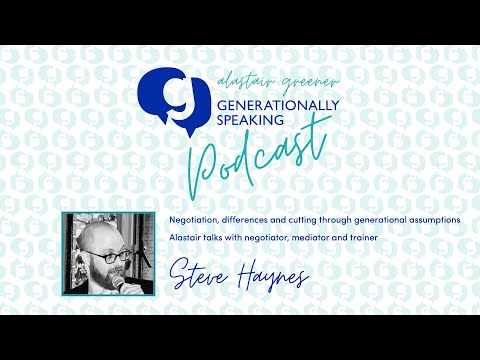
Steve Haynes (negotiator, mediator and trustee at the Reach charity) talks to Alastair about how his lived experience shaped his approach to negotiation. He discusses how growing up with an upper-limb difference and within multi-generational communities, shaped his perspectives that would prove to be an asset in his work. The conversation moves from practical negotiation tools (BATNA, push vs pull, value-trades and a cheeky “ask for the mats” tactic) to dealing with unconscious generational bias, reading power dynamics, and the simple discipline of listening to understand rather than listening to respond.
Steve Haynes Takeaways:
- Identify your BATNA (Best Alternative to a Negotiated Agreement) before you sit down as it determines your power and strategy.
- Choose push or pull depending on your leverage: push when you have options, pull when you don’t.
- Hunt for value trades (what’s small to you, big to them), that’s where deals are made.
- Don’t let assumptions run the meeting and listen to understand, not just to respond.
- When things get heated, steer everyone back to the objective, that common goal dissolves “us vs them”.
- Be realistic about what you can achieve; if you’re outgunned, get support or adjust expectations.
Steve Haynes Links
Read the full transcript
Automatically transcribed, so there may be the odd slip.
Alastair GreenerHello, and welcome to the Alastair Greener Generationally Speaking podcast, where we look at bridging the generation gap by debunking myths, tackling stereotypes, and sharing practical tips on how we can build stronger intergenerational connections. Today I'm delighted to be talking to a negotiator, mediator, and trainer with specialisms in Employment Law. He works for a National healthcare union and a charity delivering disability awareness training into workplaces. He's also a trustee for a national charity supporting children with upper limb difference, which is in fact, where we actually first met. So, uh, welcome Steve
Steve HaynesAlastair. Lovely to be here. Thanks for having me.
Alastair GreenerWell, it's a real pleasure. And you know what I really love is this whole podcast series is I've been able to speak to so many people from such a wide variety of backgrounds and you know, your skills in negotiation is something that I think probably most people feel they're doing every single day of their lives. But probably not as well as you. Well, I'm sure. Not as well as you, so I'm really looking forward to some really helpful tips that you are going to be able to help us all with to bridge those generation
Steve Haynesof negotiation. You mean Alastair?
Alastair GreenerYes, exactly, exactly. But let's start off by talking a little bit about you and your background. We met, uh, this great charity called Reach, which supports children and their families with upper limb differences. So let's talk about you as a millennial growing up going to a charity like Reach and that support network that you got, because I think you, you mentioned just before we went on air that that possibly led the trajectory that you ended up following.
Steve HaynesYeah, I think, um, I don't think it can be understated really, the impact that having an upper limb difference can have on the formation of someone's identity. Um, and, and not only the kind of disabling aspect of it, but also the visible difference side of it. Um, and I always talk, I'm a trustee. For reach, and I always talk about the superpowers that reach children have. Um, they tend to be incredibly creative because they have to think round problems from day one. Um, they tend to be very good at reading a room. You get very used to power dynamics within a room and threat perception because you are worried about am I gonna get bullied from that child at school? Uh, and then. You're incredibly tenacious as well. My partner would say stubborn, but, um, yeah. You know, I think those, those three superpowers really kind of play into, um, the role that I now do. Yeah.
Alastair GreenerAnd certainly those skills, as you said, that you acquired, um, through being a reach child, as, as we call 'em. I've been involved with the charity for, for many years and I think it does such a fabulous job. And when we get together at those various events to see those children together, sharing stories and, and in many senses that that. Almost reflects what you do in your negotiation work in terms of that you are sharing experiences and stories to actually help the better good of everybody.
Steve HaynesYeah, that's right. And you as a negotiator. Um, le let's let, why don't we delve straight into negotiation? 'cause I think we're gonna be end up referring back to it. And, and the way I kind of think about negotiation really is it's, it's almost like a series of steps that I would think about, right? So, um, usually in the first instance, you need to find out what. Your BATNA is what I would call batna. It's from a, um, a negotiation book that was published many years ago, and it's your best alternative to a negotiated agreement. So what lies outside of this negotiation? What other options do I have that are an alternative to us agreeing what we're trying to agree? And that's. Effectively gives you the guide as to how much power you've got in that negotiation. Um, if you've got lots of options outside of this negotiation, you carry more power than if you've got fewer options. And for me, that then decides the, the strategy of the negotiation. So if you've got power in the negotiation, you. Um, go for what I would call a, a push style where you are pushing your position onto the other side. Um, if your power isn't strong, then I would rely on what I would call a pull negotiation. So you're trying to draw the other side to your argument, um, and you can do that. Through collaboration, empathy, trying to draw out empathy. And I tend to use a lot of if thens in that situation. So for example, I'd say, if you can do this, then we can do that. And you're encouraging that kind of collaboration and really what you're looking for is. What I would call value trade. So something that's of high value to the other side that's of low value to our side and vice versa. 'cause you really, what you're trying to do is find the overlap in the middle of the Venn diagram. You've got two different agendas and you're trying to find is there anything in the middle that we can reach agreement on that it's for mutual benefit. Um, and then from there, I, I sometimes might throw in a few little tactical. I did refer to the dark art of, uh, negotiation earlier, and, and something to give you a little indication as to that is what I would call my CarMax principle, which is just as you're about to shake hands with. To car dealer, you ask for the mats. So it's not enough to derail the whole negotiation, but you get something extra that's, uh, they probably wouldn't have agreed if you'd mentioned it earlier on. Um, so, so yeah, they're, they're some of the things that I, I might, um, use. Um, and it's a very different negotiation style. I mean, I do talk about car dealership a lot. I do sound like a secondhand car dealer, but I'm not, I promise you. Um, but. Talk. Just going back to car dealership for a moment. If you were buying a new car from a, from a, a car dealer and it was gonna be a one-off transaction, yeah. You'd probably try and get the best deal that you could. If that's gonna be, um, you're gonna be buying a, a, a new car every two years from the same dealer. That's a very different negotiation style. It's about building the trust, the relationship, and because over the long run, then you're more likely to get more out of that negotiation. So I think all of those kind of, um. Strategies really play into what I was talking about earlier in terms of, uh, understanding power dynamics, being able to read body language, uh, which come from, uh, an upper, having an upper limb difference. I think in, in my mind, I also kind of grew up in a family, which is. Uh, not scared of, uh, confrontation, um, in terms of challenging each other, um, and, um, uh, locking horns over things. I always think of it as the, is it the Socratic method of, um, thesis antithesis and synthesis? So somebody puts forward an argument, somebody puts forward a counter argument, and then that it probably lies somewhere in, in between the, the, the right answer. And I'm certainly from a family that, that embarks in conversation. In that guise. So I'm not scared of conflict. Uh, I'm not, um, worried about being in kind of hostile, unpleasant situations, um, and, and trying to resolve conflict in that way. Um, and, and I can talk a little bit. I, I'm also a, a trained mediator and, and actually that's a, a very different skill, but born out of the same, um, upbringing if you like.
Alastair GreenerAnd the also, you can then add in the generational aspect to that, because obviously you were born in an era as a millennial, you were born in, in an era where actually it was perceived that it was all about collaboration. You know, they, they say that certainly from everything I've read that. Millennials are great collaborators. They, you know, it's just the nature of their growing up when they were at school, it was the first generation to really have much of a voice at school and they therefore, by virtue of all of that, became great communicators and great collaborators. Would you say that was typical of your upbringing?
Steve HaynesI, um, think of it as, um, I, I feel that I was quite lucky really, because I kind of bridged pre, uh, mobile phone not having a phone to having a phone. So I think for generations after me, it's probably a little bit more difficult because, um. I never had the option growing up that if, if I was in a confrontational situation, I could escape into a device and be somewhere else. And I think that's a big difference because I learned those skills to resolve conflict, to mediate, to negotiate before I had the option of being able to, like I say, escape into a, a device where even though I'm physically present in a room, uh, emotionally and psychologically, I'm somewhere else.
Alastair GreenerYeah, being present is such a massive talking point today, isn't it? You know, whether people are really focused and that, that we, we, we could go down a rabbit hole very easily, uh, talking, talking about that. But again, coming to your upbringing, because I'm always a huge fan of the concept that your upbringing really does shape what happens to you later on in life. And you know, then you add in the era, and as you say, you, you were at, you know, being an older millennial, you were somebody who was very much having to confront issues as they came along because there was no nowhere else to go. But was, were you given a voice as a youngster? Did you feel that maybe compared to the upbringing that your parents had, that you were involved in conversations more?
Steve HaynesUh, maybe, but I mean, my dad is, he's 85, uh, this year and he, um, was a, a very senior police officer and he was often throughout his career, called a rebel without a cause I don't think. He was scared of speaking up. And actually he, he ended up in, um, working in, in discipline and complaints for the police because he's very. Uh, much not prone to what I would call groupthink, um, and treating situations as, as an individual rather than, um, getting drawn into assumption and, and bias in that way. Um, so I think he, it comes from there. I think also being, being different visibly different means I'm already. Um, kind of halfway to being a challenge or a contrarian because I, I, I, I've already accepted that difference. And so that's something that I've never really struggled with. I really try and avoid group think and, and actually we can come on to talk about how, uh, bias in negotiation is, is, can be a downfall. Um, but yeah, I, I don't, I. It. It's funny when, when I was thinking about what we might talk about today, I kind of worried a bit really because I thought, well, I don't genuinely don't see generational. Um, I, I don't see it in the stereotype way. I, I like, if you were to say to me Gen XI, I, I genuinely would have to look up what ages that related to. I, I don't think of it in that way, and that's probably as a result of. Trying not to fall into assumptions, um, from my job. But I think also, um, something that I didn't mention is that I was a professional musician for 10 years working in the West End. And, and, and, and I grew up in the, the brass band tradition in Yorkshire where it's the law, isn't it? Fish and chips on a Friday and brass band on Saturday. And I was given a trombone at school 'cause it was the only instrument that I could play with my limb difference. It didn't require any adaptation for valves or anything like that. So, um. Yeah, I grew up playing the trombone and immediately went into brass bands from being eight, nine years old and, and was sitting next to people in their sixties. Um, and so yeah, I'd, I'd always, um, as I was growing up, you know, if, if I was on principle trombone in a band, more often than not, my second trombone player was double my age. Um, and so I, I don't think I've ever really. Thought in those terms. And actually when I went away and thought about why that was, when I was thinking about what we might talk about today, I thought, well actually, if you've got a shared purpose, be that music or sport, um, whatever it is, then actually those barriers or those perceptions of barriers just fall away.
Alastair GreenerAnd I've seen this time and time again in conversations. I've had guests on my podcasts and the research for my book, and that's come up time and time again that people who have been surrounded by multiple generations growing up where that was normalized and difference of generation wasn't highlighted in any way, shape, or form. That actually their viewpoints are very different to people who've had a, a slightly more siloed approach, if you like, to the way that they were brought up. And they've only ever spent time with people of their own generation. And you are absolutely right people who have spent time with lots of different generations. One of the reasons I still work in schools is because I want to feel that I understand where they are and, and what's going on, because then to me it becomes normal and I get it. And that in your work must be a huge help. And we were saying just before we went, uh, we started recording this podcast about that generational bias is something you, that you deliberately avoid in negotiation.
Steve HaynesYeah. I mean, you don't want any bias because this, as soon as you start assuming what someone might want, you've, you, you, you, you've stopped, um, trying to understand their perspective. You know, I always think about that phrase, uh, listen to understand, don't listen to respond. Um, and, and that's really what I try and do, and especially in the negotiation when it comes to. I mean, there's a region that age is a protected characteristic under the Equality Act because it leads people to have biases, um, about, um, you know, perceptions they might have about a certain generation. And absolutely as a negotiator, you don't want that. You want to see each situation. On the merits that's in front of you, rather than any perceived bias going into that situation. So, you know, sometimes if I, um, hear of people trying to research the other side of a negotiation team, I think, well, you know, you've already formed an opinion. You're not gonna be listening in the negotiation and in that moment to what the other side wants because you've already formed an opinion of what they might want.
Alastair GreenerSo how do you think people generally in life can deal with generational bias? And let's be honest, like all unconscious biases. It's natural by definition. It's not something we can avoid, but we have to step out of our comfort zone and recognize that we're doing it and therefore deal with that. What are the kind of steps that you think people can do to. Reduce that level of unconscious bias by making, you know, specific moves in a certain direction.
Steve Hayneswell the first thing is exactly what you've just said is recognizing that you might have an unconscious bias. I remember, um, attending an employment tribunal once and the judge, um, said something along the lines of, if you think that you've not got, um, subconscious biases, then you've not addressed whether you've got subconscious biases. Um, because we all have them. And it's about knowing those, and I spoke earlier about. Um, a different set of skills in mediation, for example. And one of my biases is I always want to fight for the underdog in any situation. If I perceive a power imbalance, I want to try and redress that on behalf of the party that is suffering as a consequence of that. And actually in a mediation that's not appropriate because it's their agreement, not mine. Um, so I have to remove that. And I have to try and ride that wave of seeing a power imbalance and people going at each other, you know, someone per perhaps quite vulnerable being in my mind, attacked. Um, but it, it, it's the emotion that needs to come out in that situation that then leads them to find the common ground and, and move on. And as I always say, look, you don't have to be friends. You just have to be able to work together. Um, so, so, so, so, yeah, I think. I think the, the first point really is exactly what you said, is just recognizing that you might have some kind of biases, um, whether they're, you know, related to any of the protected characteristics or, or, or characteristics that aren't protected under the Equality Act. It's, I think it's just about having that awareness, that self-awareness and as, as a, someone with a, a limb difference, it's, I, I, I think that naturally leads me to be quite reflective and look inwards. Um, and, and, and so I've had to do that myself.
Alastair GreenerWhen you see people exhibiting unconscious generational bias, which you must in negotiations and mediations that you've been involved in, how do you steer people away from it to get actually back to the main point
Steve HaynesF focusing on the goal. It's, it's the music and sport thing again, you know, and, and I, I, I'm very conscious of, um, of those barriers, those walls kind of getting in the way of the shared. So I'll always try and move people back to the common goal and what we're trying to achieve. Um, I, I very much use the kind of objective strategy tactics, you know, and, and, and often in, in, in any situation in, in a leadership role, whatever it is, you can get so embroiled in the tactics and the strategy that you forget what the objective is. And so I'll, I'll, I'll try and take people back to the objective, uh, and say, look, what is it that we're trying to achieve here? You know? And then you refind that common ground because if people. Start getting drawn into an us and them. Uh, you're not sitting around the same, the best negotiations are when you sit on the same side of the table eventually, you know, and it stops beco becoming an us and them. And really you can start out very much with sitting opposite each other. But again, it's just trying to find that, uh, overlap in the middle of the Venn diagram. And it, you know, it might be poss it might be, um, it is perfectly acceptable to say we might not reach agreement on this. Don't forget the bater again, you know, you can walk away and you can go, well actually, um, you know, I don't think we are gonna agree on this, and that's not a failure. You know, sometimes there isn't any overlap in that, in that Venn diagram. Um
Alastair GreenerOne of the things we do know is that forget the generational biases, but different generations do communicate in different ways. They present themselves in different ways. You know, if you just look at the, maybe the level of formality in a conversation, for example, will be quite different, so you might be having to bridge that. Gap where it's not necessarily the generational bias that's exhibiting itself, but actually just the nature of the way that people present because of their age difference. How do you kind of negotiate that path?
Steve HaynesHmm. That's interesting. Yeah, I, I mean, I, I'm. I genuinely don't really think about it too much. I think I, I, I, I would just try and use kind of charm and persuasion really to, to, to try and bring people back to where I wanted them to be. And humor is really effective in negotiation. Um. But sometimes what I try and avoid is serving ACEs on my own tennis court and not understanding why the ball's not coming back. And, and sometimes you have to go onto the, the other tennis court, you have to go onto their tennis court to play them at tennis, right? So yeah, sometimes you can go, okay, well that is obviously a problem for them, you know, uh, and you can sh kind of show some level of conformity and wanting to do things right. Um, you can even give off the illusion of something. You can even give, um, a very small thing, which will make a big difference to the other side. So, for example, if someone turns up to a negotiation and they're dressed very formally, and I've turned up in a, a, a Rayons T-shirt like I've got on now, uh, great band by the way. Uh, a little plug there, great band from Rather. And the Rayons. Um, and, um. Yeah. And, and someone's dressed very formally and there's some comment made, um, about, oh, you know, you're obviously not taking this negotiation seriously the way that you've dressed. Say, um, then I have a choice there. I can either dig my heels in or I can turn up wearing smart attire next time. And actually it doesn't make any difference to me. And if that means that they feel like they've won and then I can. Shoehorn a load of stuff in as a Trojan horse, then, then, then, then it's an effective negotiation. So, yeah, I think it's sometimes it's about going on to the other tennis court and, and playing them at their game.
Alastair GreenerI love that because it's, we, we can't help it. You know, we're, we're still animals at heart. We make a judgment of someone. All of those unconscious biases come out and we judge people by our own standards. Uh. And that's not saying they're high, low or anything, they're just different to maybe the other person. And we all know that especially language is such a key part of any form of relationship and certainly a key part of negotiations and mediations. How do you. Get the language to be equally understandable to both parties so that one side aren't over complicated using words and using terminology that the other side might not understand. How do you bridge that
Steve HaynesWell, I think it's about figuring out why they're using that language. Are they using it to intimidate? Um, and if they are, then you just say, well, what do you mean? You know what? And you just keep drilling down until you get to the fundamentals of what they're trying to communicate. Um, language is super important 'cause it can be a weapon. You know, you can use words, very emotive words that bring out a reaction in the other side and sometimes you might want to do that. Um, but then likewise, you can lose use language that's not emotional. It's not. Inflammatory, you can focus on facts and objectivity, um, and, and, and, and try and, um, use that as a bridge to bring people across to, to, to your side. So, yeah, I think language is, is hugely important and, and, and how you use it. And I always try to be careful with the words that I'm using to make sure they're appropriate. And the tone as well. You know, you can emphasize a word in a certain way that can bring out a reaction in someone, um, just from the word that you've emphasized in the sentence. Um, so, uh, I mean, I use the example of I think you're a good presenter and you know, well, I think you're a good presenter. I think you're a good presenter. You know, that's a very different meaning. It's the same word. So, you know, it's, it's sometimes about how you deliver it. Um, and again, it goes back to the, the, the tennis court thing. How is it landing with the other side? You know, is it bringing out, why is that bringing out a reaction in the other side? You know? And again, you have to reflect and think, you know, am I delivering this in a way that's, and, and, and, you know, sometimes you, like I say, you want to bring out that reaction. Sometimes you have to break a situation to, to then bring it back together again. To change the power dynamic in the room and get more of what you want.
Alastair GreenerI am gonna ask you something that you probably won't want to do, but give it your best shot is that we know that the way that. We see each other as different, you know, we know that older generations see younger generations as a, as a massive, uh, stereotype, but what tips would you have with someone who may be, um, a younger generation, say a Gen Z, so under, under 30, who is now negotiating with someone who's much older, who they may feel intimidated by? They may feel that, you know, they've got, they don't have the upper hand because they're in the position they are. Or maybe actually. They feel overly strong because they've got way too much confidence that possibly they should have in, in, in, at their age and level of experience. So that dynamic with an older person, we'll take it from the perspective of the young first. Have you got any tips of how they can connect with an older generation better and therefore hopefully get some form of, um, more positive
Steve HaynesWell, a, again, I think it starts with self-reflection. Um, and it's interesting you talk about the two different ways that effectively you're talking about self-worth really and self-esteem and the two different ways that they might manifest themselves. So it might be that someone feels vulnerable, um, and they don't approach it in a very, um. You know, stern way or they, they don't feel able to speak, um, up in the way that they would want to. And I always think that sometimes the bigger the front, the bigger the back. Sometimes someone who presents as really outgoing and flamboyant, actually there's a lot going on behind the scenes there that, uh, that screams vulnerability. So, um, and, and, and I kind of feel for the younger generations really, because if you are, um. If you are basing your self worth on what others think about you, that's out of your control and, and actually, if you then put that. If you extrapolate that and put that through the, the magnifier of social media, for example, you are basing your self-worth now on what people that you've never met think about you and, and you know, statistics seem to say that for every five people you meet, one of them isn't gonna like you, whatever you do. So if you are basing your self-esteem on that, then. You, you, you, you're gonna struggle. I, I, I think so. My advice to someone in that position would be try and bring yourself worth back to things that you can control. Things that make you happy. The work that you've put in. Sometimes you can't control what the other person's gonna do, but as long as you've put in the work and done everything that you could do, and you've tried your best, you can't do any better than your best.
Alastair GreenerThat's great advice. What about the other way round when you've got somebody who, you know, maybe one of the people we were talking about earlier on who just don't get the young, they see them as aliens almost, and you know, they've gotta come to the negotiating table. What kind of things can they do to try and reduce their own unconscious bias, but, and also then connect better with that younger person?
Steve Haynesthink base, base your opinions on things that you've read, not things that you've heard, um, is, is, is, is a good starting, um, point for any situation. I, I was just thinking when you said that Alastair, about a french horn player in the music business, he said, I didn't get to where I was yesterday by playing like I do today. Um, and, and, and that always, that always stuck with me and I think that's a nice way of. Of thinking about it, you know, it is very easy to, when you're a freelance musician, um, you're only as good as your last gig. And, and, and that stays with you throughout your career, you know, and there's nothing sadder than someone who, 'cause it's such a physical. Thing, there's nothing kind of sadder than someone holding a really high reputation. Um, and, um, and perhaps still thinking themselves that they hold that high reputation when the reality is that they're perhaps not. Um, so I think it's, it's, it's the same advice really. It's about basing your on, on the moment and things that you can control. And it's not a dissimilar, um, it's not a dissimilar. Position really to the, to, to the, to the other side of that conundrum that you presented me with. You know, it's, it's about being, um, keenly in the moment and being honest with yourself.
Alastair GreenerBrilliant. Yeah, I, I really love that. And I, I think the, what you were talking there about, you know, accepting where you are at that moment and where the other person is at that moment is, is, is crucial.
Steve Hayneswhich goes back Alastair, sorry to say, it goes back exactly to what we were talking about a few moments ago, is assumptions. You know, if you are saying to me that someone's gone into that negotiation, a younger person's gone in with the assumption that they're not gonna be able to speak up. And, um, an older person's gone into it thinking that, that they've seen it all before. And who's this young person coming in? Both of those people have formed assumptions about that situation before they've gone into it.
Alastair GreenerYeah. And we all know, you know, we all know the phrase about assumptions and what it does to people. Um, and, and, and I, one of the things, the purpose of this podcast and the purpose of most of my work is all about breaking down those assumptions. Yes, there are certain patterns which are really helpful, but actually they only go so far.
Steve HaynesI mean to me, sorry to jump in again, Alastair, to me, assumptions are just shortcuts to misunderstanding, aren't they?
Alastair GreenerPerfect. Right. I'm gonna keep that one. I'm gonna
Steve Haynescan have that
Alastair Greenermind. I think that's perfect. Assumptions are shortcuts for misunderstandings and you're absolutely right, and that's one of the things we want to try and avoid. Just to finish off. Steve, I mean it's been gold dust. The stuff that you've been sharing with us really helpful. And there there are things that people can apply to their everyday lives, whether that's socially amongst the family or indeed at work. Just to finish off, as somebody who is negotiating something really small perhaps, or maybe going into a massive negotiation, what are kind of the golden rules, if you like, that someone should be thinking about before going into that negotiation?
Steve HaynesUm, I think, uh, thinking about what it is that you're trying to achieve and whether that's realistic or not, and it might be for example, that it could be realistic for someone who feels more confident going into that negotiation. But if you are not. An expert negotiator with, you know, a background in employment law and you are trying to go into a negotiation with your employer, then they're gonna run rings around you. So, I, I, I would say, you know, be realistic about what you think you can achieve based on your BATNA and your skillset.
Alastair GreenerGreat advice and I shall bear that in mind next time I negotiate my fee for my next job.
Steve HaynesWell, if you want a negotiator to help you with that, Alastair, you know where I am.
Alastair GreenerAbsolutely. Now, really interesting. Normally, Steve, we put people's socials in the show notes and things, and you deliberately don't have any socials.
Steve HaynesYeah, just going back to really the, the self-worth thing. You know, I, I don't like the idea of basing my sort of self-worth on what other people think about me. I mean, that's not the reason I came off social media in the first place. It was more to do with the algorithms portray, you know, portraying things to me or honing what I was seeing. That, that, that bothered me. And I, I realized that quite a long time ago. Given my background, um, I used to get into some, um, very fruity arguments on, on, on social media with people who thought very differently to me. And all of a sudden I started being shown posts from people who thought the same way as me, and I didn't quite get the same, uh, fun from that and realized that actually the algorithms were, were creating this echo chamber of, um, what, what I was should think. Uh, and again, that just entrenches people's beliefs. So, yeah, I, I, yeah, steer clear of it.
Alastair GreenerSo if you wanna get a hold of Steve, you'll have to get a hold of me first. And, uh, then we'll decide whether to, to connect you. And then the other thing, of course, is what we could do is we could put in the charity that we both, uh, feels very strongly about reach for the child, the, um, charity for children and their families with upper limb differences. So maybe we'll pop that in the show notes instead.
Steve Haynesfine. Fine by me, Alastair. Yeah.
Alastair GreenerSteve, thank you so much. I really appreciated all of your valuable advice and wise words. Uh, really appreciate it. Thank you very much
Steve HaynesNo problem, Alastair. Thank you for your time.
Alastair GreenerThank you. And thank you for watching or listening. We'll be back in two weeks. See you then. Alastair (2): The Alastair Greener Generationally Speaking podcast was presented by me, Alastair Greener. It was recorded at Granary Studios and produced by James Jones. Please follow us and leave us a review wherever you get your podcasts. To find out more, visit generationally speaking.co.uk.