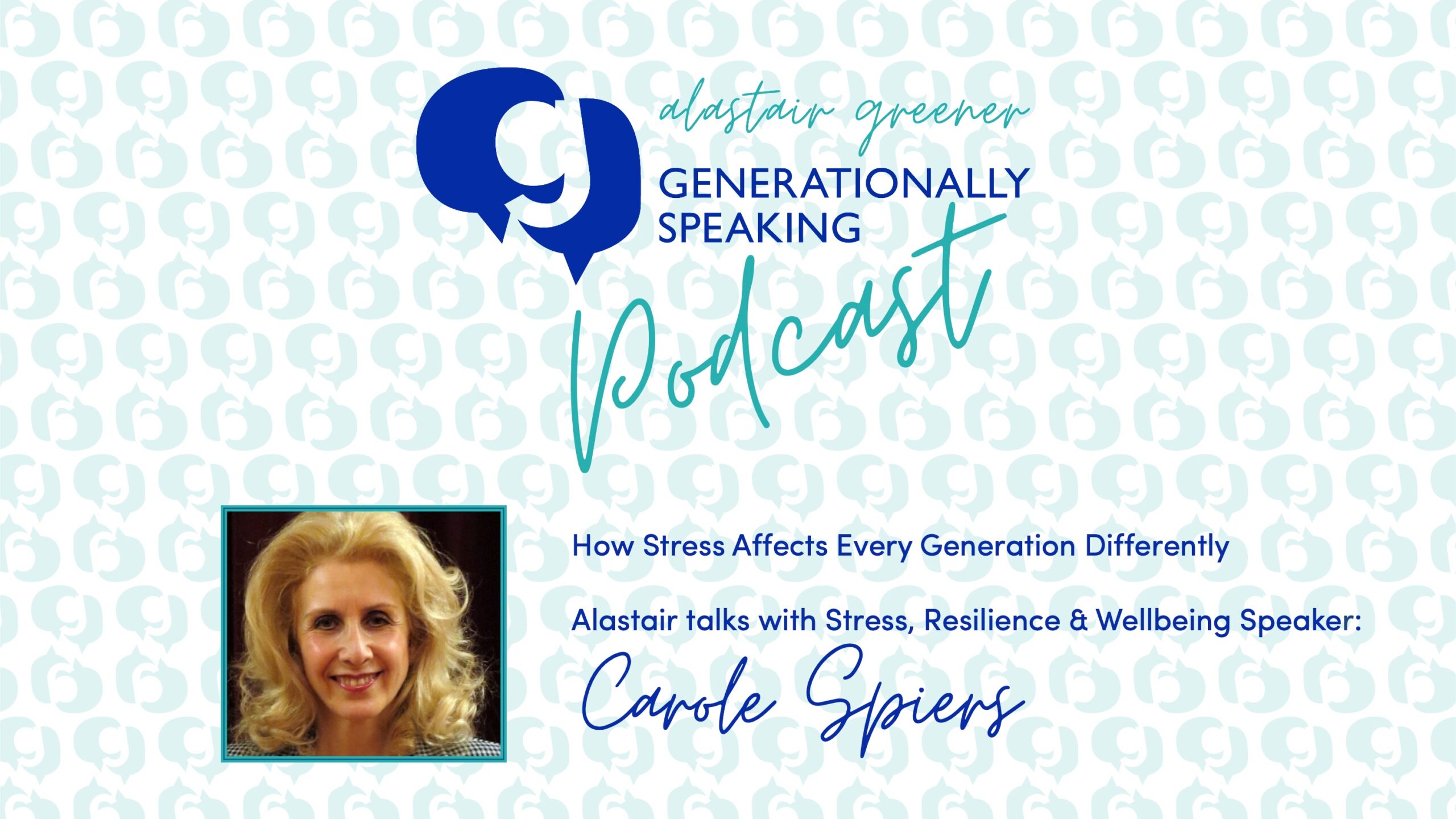
Carole Spiers: How Stress Affects Every Generation Differently
In this episode, Alastair talks to Carole Spiers , an internationally recognized stress management guru and author, and they discuss how each generation experiences and copes with…

Article

There is no single right number of hours, but the wish for a better balance runs across the generations, even if they expect it in different ways. In our 2023 study of more than 100 HR managers, 55% saw big age differences in expectations of working hours. When 61 UK companies tried a four-day week in 2022, 56 carried on with it, and Deloitte's 2026 survey found work-life balance was the top career goal for UK millennials as well as Gen Z.
There's no single right number of hours, but UK pilots of shorter weeks have mostly gone well, and the wish for a better balance isn't confined to the young. In our Generations in the Workplace Study 2023, 55% of HR managers saw big age differences in expectations of working hours. And when 61 UK companies tried a four-day week in 2022, 56 of them carried on with it afterwards.
Whether we like it or not, the workplace is changing, and much of that change has been driven by Gen Z.
HR managers certainly think so. 55% saw big age differences in expectations of working hours, more than in any of the other nine areas we asked about. That's a significant number, and it means senior management has to look at how people work. If they don't, they're likely to see attrition rise, along with friction between the generations.
Workers see it as well. In our Communication Habits and Preferences 2024 survey of 4,067 people, 43% of workers named work ethics and 41% named attitudes towards work-life balance as ways that thinking and behaviour at work vary with age.
Gen Z have a strong focus on work-life balance, and it's often portrayed as them not wanting to work hard. That's a misconception. For the right employer, they are willing to go above and beyond, but only so far.
My own view is that much of this comes from watching their parents work extremely long hours, and often burn out as a result. Like so many generations before them, Gen Z are keen that history doesn't repeat itself. Deloitte's 2026 Gen Z and Millennial Survey, published in May 2026, found that work-life balance was the top career goal for Gen Z in the UK, chosen by 20%.
When stress management expert Carole Spiers joined me on the podcast to talk about how stress affects every generation differently, it turned out that our stress triggers, and how we respond to them, are heavily shaped by the world we grew up in.
Yes, and it's the part we forget. We're all changing: those of us in older generations have changed our expectations as well, and we're also looking for a better work-life balance. In the same Deloitte survey, work-life balance was the top career goal for UK millennials too, chosen by 24%.
The pandemic may have brought it into focus. The Office for National Statistics surveyed adults aged 50 to 65 in Great Britain who had left or lost their job since the pandemic began and not returned, publishing the results in September 2022. 36% had left to retire. Among those who would consider returning, the most important factor in choosing a job was flexible working hours (32%), ahead of good pay (23%).
The biggest test ran from June to December 2022, with 61 companies and around 2,900 workers, in what the researchers called "the world's largest four-day working week trial to date". Pay stayed at 100%. According to the pilot's results report, published by Autonomy in February 2023, 56 of the 61 were continuing with a four-day week afterwards and 18 had made it permanent.
Resignations fell by 57%, and 71% of employees reported lower levels of burnout. The researchers were careful, though: because of the small numbers, they were "unable to say that these three trends are statistically significant" for hiring, resignations and absence. A follow-up in February 2024 found that at least 54 of the 61 were still operating the policy and at least 31 had made it permanent.
In a later pilot run by the 4 Day Week Foundation with researchers at Boston College, launched in November 2024, 17 organisations with more than 950 employees took part, and all 17 carried on with a four-day week or a nine-day fortnight. In July 2025, South Cambridgeshire District Council voted to become the first UK council to adopt a four-day week permanently, after a report from the universities of Salford, Bradford and Cambridge found 21 of 24 services had improved or stayed the same.
Two cautions. The organisations signed up to take part, so they are not a random sample of UK employers. And the pilot reports don't break their results down by age, so they can't tell us which generation gained most.
Start with outcomes. Agree what good work looks like and when it's needed, then talk about the hours and pattern that will deliver it.
Ask each person what balance means to them. For one it's a shorter week, for another a later start, a nine-day fortnight or phased retirement. Our guide to managing five generations in the workplace covers how to have those conversations.
Protect some shared time. If everyone works a different pattern, agree core hours or a day when the whole team is together, so newer colleagues still get time with experienced ones.
Trial it and measure it. If you're considering a four-day week or compressed hours, run a time-limited pilot with clear measures, and involve people of every age in designing it. The differences between Gen Z and Millennials at work are a reminder that even neighbouring generations can want different things.
How about you? Has the way you work changed, and for that matter, do you have a choice?
HR managers think so. In our 2023 study of more than 100 HR managers, 55% saw big age differences in expectations of working hours, the highest of the ten areas we asked about. In our 2024 survey, 41% of UK workers named attitudes towards work-life balance as something that varies by age.
No. Deloitte's 2026 Gen Z and Millennial Survey found work-life balance was the top career goal in the UK for both groups: 20% of Gen Zs and 24% of millennials. Among adults aged 50 to 65 who had left work since the pandemic began and would consider returning, the ONS found flexible working hours were the most important factor in choosing a job (32%).
For most of the companies involved, yes. In the 2022 pilot of 61 companies and around 2,900 workers, 56 continued with a four-day week and 18 made it permanent. A year later at least 54 were still operating it. The researchers said they could not show that the falls in resignations and absence were statistically significant, and the companies chose to take part.
Agree outcomes first, then discuss hours. Ask each person what balance means to them rather than assuming by age, offer more than one pattern, protect some shared time for the whole team, and trial any change for a fixed period with clear measures before making it permanent.
Book Alastair to speak to your organisation about what each generation expects from work, using UK research.
Keynotes and talksIn this episode, Alastair talks to Carole Spiers , an internationally recognized stress management guru and author, and they discuss how each generation experiences and copes with…
Dr. Lynda Shaw , a behavioural neuroscientist and leadership psychologist, talks to Alastair about how each generation’s brain wiring influences perceptions and decision-making. She…
In this energising episode, Kim Seeling Smith, future-of-work strategist and founder of Ignite Global, joins Alastair to unpack what younger generations want from their careers, and…
In this values-driven episode, Paul Hargreaves, B Corp leader, author, and CEO of Cotswold Fayre, talks with Alastair about how purpose-led businesses are better for people, planet…
Invite Alastair to speak at your event
Contact