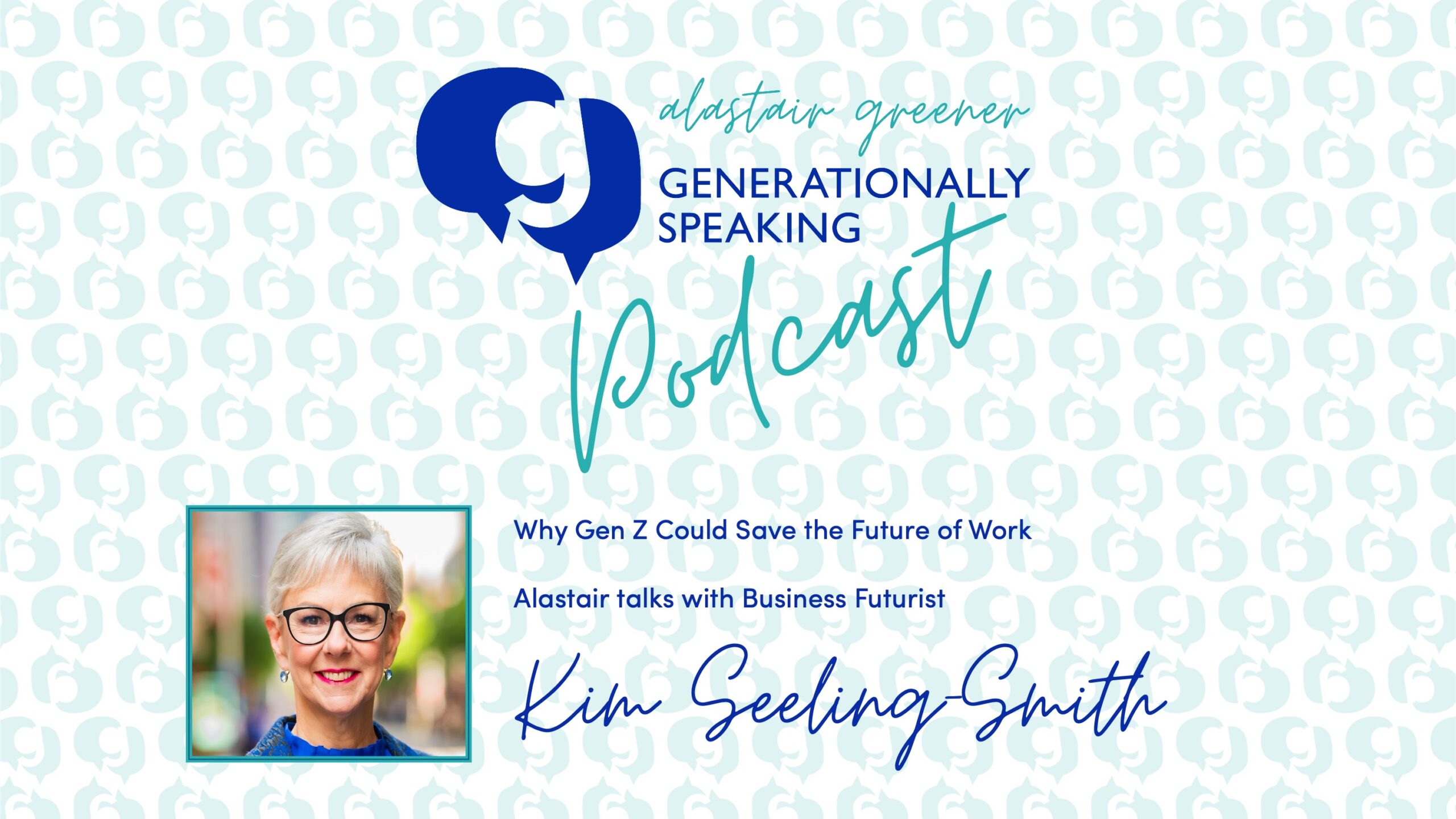
Kim Seeling Smith: Why Gen Z Could Save the Future of Work
In this energising episode, Kim Seeling Smith, future-of-work strategist and founder of Ignite Global, joins Alastair to unpack what younger generations want from their careers, and…

Article

Only 6% of UK managers believe young recruits are ready for work, while 45% of 18 to 24 year olds believe they entered the workforce equipped with the skills needed to succeed, the Chartered Management Institute reported on 9 July 2026. 70% of young people feel employers are biased against their generation. Much of the gap is about communication, and managers can narrow it by setting expectations, explaining the obvious and agreeing how often to give feedback.
Only 6% of UK managers believe young recruits are ready for work, while almost half (45%) of 18 to 24 year olds believe they entered the workforce equipped with the skills needed to succeed. The figures come from the Chartered Management Institute's report Bridging the Gap: Supporting a New Generation of Leaders, set out in the CMI's release of 9 July 2026. The two sides are describing the same first months at work and reaching very different verdicts, and much of the difference comes down to communication.
Base: 514 people aged 18 to 24 and more than 1,000 UK managers Source: Chartered Management Institute, 9 July 2026
That matters most in the first year. For graduates and apprentices who started in September 2026, it is when they learn how a workplace works, and when first impressions form on both sides.
The CMI combined a nationally representative YouGov poll of 514 people aged 18 to 24 with research among more than 1,000 UK managers. More than six in ten managers (61%) think younger workers are more likely than other age groups to lack "resilience, professionalism, communication skills and the ability to accept and act on feedback". More than nine in ten (91%) say the gap is negatively affecting performance across their workforce.
Young people see it differently. 70% feel that employers hold a negative bias against their generation. And while 45% say they arrived equipped, that leaves a majority who did not say so.
Part of the answer is who does the judging. The CMI release cites previous CMI research finding that more than eight in ten (82%) managers are "accidental managers", promoted without formal management training. Millennials are especially likely to be the ones doing the managing: in our 2024 survey, 48% of Millennial workers manage other people, against 39% of all workers. Our comparison of Gen Z and Millennials at work sets out where those two generations differ.
Part of it is where young people have come from. Charlotte Marshall, a higher education professional, explained on the podcast why the move into work can feel abrupt for students used to structured guidance and pastoral support, in Gen Z, graduates and getting ready for the real world. Writing about that conversation in a LinkedIn post in March 2026, Alastair described her view that beneath outward confidence there is often "low self-belief and anxiety about whether effort really pays off". Her term for it, he wrote, is "work wariness".
Communication skills and the ability to accept and act on feedback are two of the four things the 61% of managers say younger workers are more likely to lack. Our own survey points the same way from the worker's side: 75% of UK workers say thinking and behaviour at work vary by age, and 51% name communication styles as the main difference.
Feedback is where the two sides most clearly talk past each other. In our 2024 survey, 45% of Gen Z workers prefer weekly performance feedback, and 41% of UK workers receive less feedback than they want. That 45% comes from a different survey, and measures something different, from the CMI's 45% on readiness. Put side by side, the two studies point to a practical problem: a new starter cannot act on feedback they are not given.
Quietness is another source of misreading. In the same March 2026 post, Alastair advised leaders not to "confuse quietness with laziness", because a graduate who seems disengaged may simply not want to "bother" a busy manager.
The CMI's chief executive, Ann Francke, summed up the report's argument: "We've spent years asking whether young people are ready for work. It's time we started asking whether work is ready for young people." In a LinkedIn post in July 2025, Alastair made a similar point, urging employers to stop worrying about what Gen Z "won't tolerate" and focus on what they bring. For a line manager, that comes down to a few habits.
Set expectations in writing. In the first week, write down what good looks like: working hours, how quickly to reply to messages, what to do when stuck and what the first three months should deliver. The standards nobody states are the ones new starters miss.
Explain the obvious. Say how meetings run, which deadlines can move and which cannot, and who to go to with a question. What feels obvious after twenty years at work is new to someone in their first month.
Agree a feedback rhythm. Ask each new starter how often they would like feedback and in what form, then keep to it. Short weekly check-ins in the first months cost little, and our article on how often Gen Z want feedback sets out the data.
Train the managers. 86% of young employees told the CMI it was important that line managers receive training to support people at the start of their careers, and 89% of managers who have had management training say it has improved their ability to develop younger employees. Our guide to managing five generations at work is a practical starting point.
Young recruits can meet this halfway by asking what good looks like, asking for feedback rather than waiting for it, and saying when they are stuck.
Managers and young people disagree. In the Chartered Management Institute's report of 9 July 2026, just 6% of UK managers believed young recruits were ready for work, while 45% of 18 to 24 year olds believed they entered the workforce equipped with the skills needed to succeed. 70% of young people feel employers hold a negative bias against their generation.
More than six in ten managers (61%) in the CMI's research think younger workers are more likely than other age groups to lack resilience, professionalism, communication skills and the ability to accept and act on feedback. Previous CMI research found 82% of managers are "accidental managers", promoted without formal management training.
In our Communication Habits and Preferences 2024 survey of 4,067 people in the UK, 45% of Gen Z workers prefer weekly performance feedback, and 41% of UK workers receive less feedback than they want. This is a different survey, and a different 45%, from the CMI's figure on how many young people feel ready for work.
Write down expectations in the first week, explain the unwritten rules, agree how often to give feedback and keep to it, and check in before reading quietness as disengagement. Training helps: 89% of managers who have had management training told the CMI it improved their ability to develop younger employees.
Book Alastair for a keynote or talk on communicating across the generations at work.
Book a keynoteIn this energising episode, Kim Seeling Smith, future-of-work strategist and founder of Ignite Global, joins Alastair to unpack what younger generations want from their careers, and…
Alastair welcomes Farzana Parkar, an HR consultant at face2face HR and who describes herself as an Xennial with 15 years’ experience in HR.
In this values-driven episode, Paul Hargreaves, B Corp leader, author, and CEO of Cotswold Fayre, talks with Alastair about how purpose-led businesses are better for people, planet…
In this honest and reflective episode, Alastair speaks with Kristine Long, a senior leader at IBM with a decade-long career across London and New York. Kristine explores what it means…
Invite Alastair to speak at your event
Contact