
Podcast · Episode 46
Human Bandwidth and Why Knowing Your Stuff Is Not Enough
Guest: David Duffett, Chief EnthusIASM Officer, Let the Geek Speak. Host: Alastair Greener.
Audio
Video
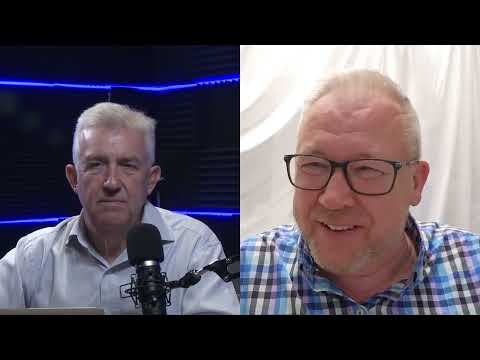
Alastair is joined by David Duffett, an award-winning speaker, chartered engineer and author of “Be The Nerd That's Heard”, who helps technical experts raise what he calls their human bandwidth so that their knowledge and ideas are not lost through ineffective communication. David's own path ran through pirate radio transmitters he built himself, the Civil Aviation Authority's telecoms engineering college at Bletchley Park, and a spell as worldwide community director for the Asterisk open source project.
In this episode David explains why the IASM in his job title is capitalised, why the old model of the deep technical expert in the back room has been flipped on its head by AI, and what happened to a cohort of Bloomberg engineers who became managers without ever having given face to face feedback. He pushes back firmly on the stereotype that engineers are simply introverts who dislike public speaking, and offers a set of practical protocol matching tips for communicating across the generational gap in technical teams.
David Duffett Takeaways:
- Knowing your stuff isn’t enough. The skill that matters now is communicating just the relevant part of your stuff to the audience in front of you
- Engineers are not afraid of speaking in public. They are afraid of looking ill-prepared in front of their peers, and that is a fixable problem
- Communication is a muscle. Technical people have spent years building the technical one and ignoring the communication one, so the imbalance is trainable
- Encode the message in the audience's own language. Talking to engineers about rapport gets scepticism. Talking about the bandwidth of your human connection channel starts a conversation
- Younger engineers arrive ready to broadcast, having grown up sharing online, but they are not always set up for two-way communication. Human bandwidth must be open in both directions
- A generation of engineers came through university and into work during lockdowns and reached management having never given feedback face to face. That gap needs deliberately filling
- Protocol matching runs both ways. Senior engineers can learn some of the younger register, and younger engineers can offer more detail to senior colleagues
- The art of the unsolicited presentation: spot something two teams misunderstand about each other, offer a lunch and learn, and you demonstrate your value without self-promotion
David Duffett Links:
Read the full transcript
Automatically transcribed, so there may be the odd slip.
Alastair GreenerHello and welcome to the Alastair Greener Generationally Speaking Podcast, where we look at bridging the generation gap by debunking myths, tackling stereotypes, and sharing practical tips on how we can build stronger intergenerational connections. Now, my guest today is an award-winning speaker who helps technical experts raise their human bandwidth by making sure that their knowledge, ideas, and expertise are not lost through ineffective communication. Now, amongst the things we're gonna be talking about today are how communication within engineering has changed whether young people are still drawn to engineering careers, and how roles and expectations within the industry are evolving. So please welcome the Chief Enthusiasm Officer at Let the Geek Speak, David Duffett.
David DuffettThank you for that introduction, Alastair. It's great to be along and, uh, I'm really happy to be here and to be speaking with you today.
Alastair GreenerWell, I think we first of all have to start with the chief enthusiasm, and as people will see in the notes it's enthusiasm and the ISM at at the end. So what, what's that all about? Tell us what that all
David Duffettvery pleased you asked Alastair to and totally unprepared as well. We didn't talk about that, did we? But I do capitalise it for a reason. And the IASM is capitalised because it stands for I am sold myself. And the message I give to people is that they can't talk about something unless they're totally sold on it theirselves. And so when I'm talking to people, like pre-sales people, and they, the boss has said, right, we need you to give this presentation. I say, one of the tests is, you know, do you know about it? And are you enthusiastic about it and sold yourself? Because if you are not, he should probably pick somebody else. And you are not, you know, you're not doing this to wriggle out of it, but you genuinely need to be sold on anything that you are gonna talk about in front of a group.
Alastair GreenerBrilliant. I I, and, and that makes complete sense. And do you know what, that links very well to generational things because we live in a world, especially with younger generations who are looking for authenticity more than ever before. Uh, and I know it's a buzzword that everyone says, but actually it really is, uh, a meaningful thing. So that absolutely, uh, is consistent with that. So let's start off with your generation, David. What generation are you?
David DuffettI, I'm not sure whether I know the, the label Alastair. I was born in the sixties and I, I think I'm too young. Well, I'm hoping I'm too young to be a boomer, so where does that place me?
Alastair GreenerOkay, so as long as it was after 1964, then you are a Gen X. Um, but
David Duffettme.
Alastair Greeneran, an early Gen X and, and you are defined as well, not defined, but the kind of like label or the patterns that exist for you as being very self-reliant. Latchkey kid, kind of, you know, the generation that was sent out, um, at eight o'clock in the morning and say, don't come back until six o'clock at night. Um, very self-reliant, very creative and big problem solving, uh, generation. And of course they saw, uh, technology change. They were the first generation to have computers in school, for example. So that a lot of that kind of thing framed them. So when you hear that, does that all sort of resonate for you?
David DuffettYeah. Not, not all of it does. A lot of it does. But, um, my, my mum was a stay at home mum. She'd previously worked in a bank, but when the children came along and I was the first, she, she devoted all of her, uh, energies to looking after us. There ended up being three of us. But what I do remember when you said about, you know, out at eight in the morning, I do remember my mum's famous words. If ever I claim to feel ill as, as she kicked me out of the daughter school, I'd hear the words, you'll feel better when you get there. And that was,
Alastair Greeneractually you've raised.
David Duffettcarry on.
Alastair GreenerNo, well you, you've raised a really interesting point there when it comes to stereotypes and things, because although yes, you know, you were probably because this was the first generation where more parents were both working and therefore that led to that culture of off you go, but also it was a generational thing that that's what everybody else was doing. So therefore your mother felt quite comfortable doing that to you. 'cause that's what everybody else is doing and I think we should never underestimate the, the power of peer pressure and parenting, peer pressure is what everybody else is doing. So, yeah, that, that's quite interesting. So what was life like growing up? Where did you grow up and what was it like?
David DuffettYeah, I, I grew up in a small town called Winslow, not Winslow, Arizona for our US uh, viewers and listeners, but Winslow Buckinghamshire, it's just 10 miles north of Ailsbury. And it was, you know, it was all I really knew because I, I was literally born a few doors down from where I lived, and the family went back several generations. In fact, my great grandmother had eloped from Winslow with a sailor and got married in Portsmouth. So, uh, we were definitely very Winslow people and, and it was the stereotypical place where everybody knew everybody else. And I remember one particular time when I was on my bike with some friends, quite a long way from home across the other side of a town, and I said a swear word. And, uh, a man came up to me and said, I heard what you said. Now go back and tell your mum what you said. 'cause you know, people knew each other. And I think I might have forgotten to tell my mom, Alastair, and, uh, just like to say that swearing is not part of my everyday vocabulary these days. So, uh, yeah, it, it was that kind of place where everybody knew each other and, and actually when I was 13, I pedalled the Granville style bike and delivered groceries to old ladies in this town as well. So, you know, it had all the hallmarks of a stereotypical English town, I think.
Alastair GreenerYeah, and, and actually very much of the upbringing as well, because, you know, in my work I talk about the five circles of generational influence and the fact that you are in that smaller community will have absolutely framed the person that you are today as, as you, as you've said. So, you know, you are, you are an engineer by, you know, by career if you like. Tell us, how did you get into engineering? Was that always something that was gonna be for you? Was it an obvious choice?
David DuffettUm, I, I can only say this in retrospect, I wouldn't have been able to tell you or articulate it at the time, but I was always interested in communication. Communication was my thing. And it started off with, uh, CB radio and stuff like that. That was, you know, when, when I was a lot younger and it was before it was legalised in the uk so it's all a bit cloak and dagger with these boxes that were coming in from America and changed hands, you know, behind the closed door and things like that. But I also got into pirate radio and used to build my own transmitters. Um, but I think my defining moment in cementing that engineer career came when I ended up working in Bletchley Park. Not, uh, as a code breaker in the war 'cause I'm a bit too young for that. But, uh, at, at Bletchley Park there was still the Civil Aviation Authority and British Telecom and the Civil Aviation Authority had their college for telecoms engineering, where they taught air traffic engineers how to maintain and repair the communications equipment that keeps aeroplanes in the skies. You know, not only the radio communication for talking to the pilots between and the air traffic controllers, but also the navigation la that aeroplanes rely on. And I was very blessed to get a job there. Uh, and with it being so mission critical, they can invest a lot of time and money in getting things right. So it's not like a, you know, a commercial industry where you go on a one day class about something, they do things properly. In fact, I remember the introduction to training techniques class was two weeks long, and that was just the introduction down at Hern Airport, but it was an incredible place, of course, steeped in history and now it's a museum. And so that, that's, you know, that's what kind of set me on my path. But it also was, was the seeding for what I do now because at the time I was working with very, very many, very clever people who were much more technically brilliant than I was. And I never really understood at the time why I couldn't force myself to get into the technical details quite as much as they did. And, and I could, you know, I did enough of my job, I could deliver the training. I got good, uh, reviews and things for training I delivered. But most of them were kind of very deep technical people. And what I came to understand later on in life is that the reason my, why my pendulum didn't swing right up at the technical end is because I was actually a bit of a people person in terms of communications as well. And so what I found later on, and what I came to, you know, understand better is that my, my skill, if you like, laid in doing some translation, decoding some of the technical stuff for less technical people to help them understand where necessary.
Alastair GreenerAnd you know what, when you talk about that, it's, it, you know, it's really useful for us all to think about engineers and how engineers think, and you know, what's going through their minds. Because when I talk about, you know, communication, it's all about the audience. It's about how that message is going to be received. So you clearly, through your background, have a very, very insightful view of how engineers communicate, how they think. And maybe for our listeners, you know, give us a bit of an idea of an engineer's perspective of how they communicate versus maybe people from other walks of life.
David DuffettOkay. Yeah. Well, in the, the engineering world, knowing your stuff is what it's all about. You know, the, the best compliment you can pay somebody is to say, Alastair really knows his stuff, you know, about this technical thing. Uh, and my key phrase is that knowing your stuff is not enough. It's the ability to communicate just the relevant part of your stuff. And so one of the things that engineers like to do is they do like to unload everything they know about a particular subject. And of course, as a lay person, you don't really wanna know all of that. You wanna know the relevant parts. And so part of what I help engineers do is to actually understand what is the relevant part to an audience that they're talking to, so that they're not spilling everything, they're just giving the most important parts. So these, the engineers are very obsessed with things like process. They like to know the reasons why, you know, if you tell them something, they really wanna dig down and get into the whys. Whereas less technical people are more concerned with the practicalities of the day to day. Uh, and so you can get a mismatch. But what I found myself, uh, working with was bunches of people who were hugely technical, but couldn't always get their own value. Understood. So they knew what they were talking about, but they weren't necessarily heard. And, and that's one of the differences I see. 'cause I, I think we're gonna perhaps talk about these at some stage, but the difference is that back then, technical kudos was what it's all about, um, in these, uh, environments. But these days you still need a technical background to talk about technical things. But if you're struggling with any particular knowledge, you know, you used to go to Google and these days you'd go to chat GPT or Claude or whatever, and you'd get all the answers. And so the actual pinpoint technical knowledge is no, no longer where it's at. It's not the engineer in the back room studying, you know, with the curtains closed and knowing all the details and unable to talk to other people. In fact, it's flipped really. And what it's all about today is people that have an engineering background and can find the answers. They don't necessarily need to know them all, but they do need to be able to communicate it in a way that's, uh, acceptable and will resonate with any particular audience that they're talking about. I, you used it in the introduction. I call it human bandwidth. And I believe that's where the important skill set lies these days.
Alastair GreenerYeah, and I, I'd love to pick up on that actually, because, you know, it was really interesting you were saying there that how the perspective of engineers has changed, and for that matter, the way that they communicate. Let's, let's dig into that a little bit more, because one of the things that I enjoy talking to my guests about is their particular profession and how each generation has approached that profession. So when it comes to engineers, you look at the apprentices coming into the workplace like you were doing in the, I guess, round about the 1980s. What's different about engineers coming into the workplace from then to now? And how much of that was down to the generational difference as opposed to the engineering difference?
David DuffettYes. Well, yeah. So as I said, technical knowledge was what it was all about. And in fact, uh, it was the nineties when I was in Bletchley Park. Uh, 'cause I've been through a few different things before I got there. But what you found was that the cadets that were coming into the Civil Aviation Authority, it was all about what they knew. And they were very often, um, hired from marine colleges. And that sounds a bit counterintuitive, doesn't it? You've got people that were training at marine colleges, but now they're coming into aviation. But the reason was, if you are an engineer on a boat back in the day, you've got nobody else to ask. You really have to know what you're talking about. And so it was that mindset that you had to be pretty self-sufficient that led to these people being recruited. But I think a big difference, Alastair, is that coming away from just being totally technical and not doing anything else, working in the backroom, the youngsters of today are used to transmitting information. They're used to broadcasting, they're used to sharing. You know, they'll get on their phone and do a live or they'll share a reel on Instagram. And, and so that's something that engineers never used to do. So even um, now engineers coming up through college and university are actually more used to putting things out there. And in fact, often colleges and universities will do something along the lines of presentations these days as well as part of a lot of different, uh, disciplines. But what's still missing is the direction of a presentation to gain an output rather than just broadcasting for the sake of broadcasting and getting it out there. So I think that's a bit of a difference that the, the engineers coming up now are more used to getting things out there, but it's not channelled like it needs to be.
Alastair GreenerOne of the things that people talk a lot about today is neurodiversity and the concept of introversion, extroversion, um, A DHD and, and, and lots of other ways of, of, of thinking is, is being talked about a lot. It, how does that apply to the engineering industry? Because many people would suggest that some of the best engineers have actually been neurodiverse or certainly many have been introverted. Is that a fair, a fair assessment of the industry or is that one of those myths?
David DuffettNo, I, I think there's something in there. Uh, and, and to use perhaps what's a, you know, an older term now? Uh, many engineers, um, not, not a majority, but a good number of engineers would possibly be determined as being autistic. Um, and, and that, what that means is they're able to focus in, sorry. What that means for engineering life, if you like, is they're able to focus and go very, very deep. But it does sometimes mean that they're not so good in other categories, if you like, of their, their job. Uh, and one of the other roles I did was, uh, working, uh, for the Asterisk Project, which is open source software project. I was the worldwide community director, and I would fly around the world and go to conferences and talk about telecoms, which I, I love doing. And Asterisk was a platform for that. But I met many engineers who were brilliantly able to focus right down on details and code up software, but they would be called on to make presentations at these conferences, and that's when things would go a bit awry because they weren't really properly prepared for it and, and possibly didn't want to do it either. And so really it's, you know, desire is a big thing. And so if people don't want to do a certain thing, like get up and speak in public, then I believe they shouldn't be pushed in that direction. How far new road diversity plays into that. I, I wouldn't like to put a, a measure or a figure on, but one stereotype I tend to push back against is when people say, well, engineers, you know, they don't like speaking public. They're all introverted, they're not interested. My thesis, if you like Alastair, is that engineers have pumped this muscle since they were young. You know, they went to college and university, they've pumped their technical muscle, they got a job, they were trained on the job, they pumped their, they got some product updates, they pumped their technical muscle all the while they've actually had a communication skills muscle, but they've not been pumping it. It's kind of withered, if you like. And so I pushed back, uh, and I believe that people are not scared of speaking in public. What they're scared of is looking ill prepared in front of a group of people, sometimes their peers. And so if I can help them pump that muscle and do all the things that you need to, to have the confidence that comes from the clarity that comes from having a framework before you get out in front of anybody, then actually I can help you pump this muscle and kind of balance you up as an engineer between those two things.
Alastair GreenerAnd has that you, you know, you talked earlier on about, you know, colleges today that they're actually even teaching them presentation skills at college as, as young engineers. So is, is that the big difference in terms of how younger engineers present today? Because one of the challenges I can imagine is that you might have someone who's just a brilliant engineer, as you say, can go really deep into a particular subject because that's their mind mindset, but not necessarily be the best communicators. And is there an argument to say, well, let's be pragmatic about it. They bring so much to the table in terms of their technical expertise. They, they can't present it, they don't want to present it. And therefore, actually that's fine. We'll get somebody else to do that.
David DuffettYeah, if people genuinely don't want to, then yes, that that would be an idea is pair them up with somebody else to sort of present it for them, if you like. Having said that, there's definitely a very sizable segment of engineers that would like to be better understood that, you know, know they know their stuff, but don't see their career advancing as it should based on their technical knowledge. And it's, well, it's the, the title of my book, if you like, be the Nerd that's heard. It's all about helping engineers to truly communicate their value, not just communicate what they know, but to communicate their value in general so that employers, hiring managers, um, their peers, their customers, and clients understand that better.
Alastair GreenerWhat immediately comes to mind is, and, and bear with me on this thought, but I'm thinking of, you know, in the world of acting and celebrity, is that somebody is known for what they do. They might be a sports person, they might be an actor or presenter, and then of course they're then having to productize, if that's such a word, what they're doing. And then they go round on the media circuit, they get interviewed by everybody, and it becomes just a necessary consequence of the job because you've gotta get out there, you've got to be known, you've gotta be seen for, for, for what you do because the commercial aspect takes over. Would that be a fair parallel in the world of engineering?
David DuffettYes, but it, it would be a sort of a frightening parallel for lots of engineers to think, you know, 'cause they'd be worried about having to become somebody else. But again, my thesis is that you don't need to become somebody else as the cliched saying, uh, goes, you know, be yourself. 'cause everybody else is taken. Yeah. And, and so, um, my appeal if you like to engineers is that getting out there and communicating your value does not have to make you fake or salesy or anything else. And that it doesn't even have to be based on charisma. I mean, it's great if you've got charisma, but my thesis is that you can engineer great communication. Just to give you an a couple of examples, um, from my seven power presenting protocols, the first one is purpose. You know, all about defining and underlining the outcomes from a given set of communications or presentations. And that is outcome engineering, your engineering and outcome. Another one of the protocols further down is called preferences. And it's all about, and, and this is an absolute key, actually, I should just stop a moment on this because even the newer generation of engineers, they might be a bit more out there and prepared to kind of get themselves out and broadcast a bit, but they're still often a lack of self-awareness. And I don't mean that in a horrible way, but what I mean is that perhaps they've never had that thought process that says, ah, I learn best by doing, but I wonder how other people learn best. Maybe the audience that I'm gonna talk to in the demo next week don't learn best by doing. Maybe they actually want to get a lot of instructions before they do anything else. And so one of the preferences I have is called, um, pre, sorry. One of the protocols I have is called Preferences. And it's all about that. It's all about identifying your own style and thinking about the potential styles in any given audience, whether it's a meeting or a demo or a presentation. And then thinking about how you can address them best and actually putting things across in the way that your audience is best going to re receive them. And I call that resonance engineering. So for everyone in my protocols, not only is there a p be begin, you know, a p word for the protocol, but there's an engineering term like outcome engineering. Resonance engineering practise is a very important thing as you know, Alastair. And that's reliability engineering, it's engineering the reliability for when you come into a meeting or a presentation that you can reliably deliver the thing that you set out to do.
Alastair GreenerAnd a lot of the skills that you are talking about, there are actually just great positive life skills for everybody. One of the things I'd like to hone in on a little bit is actually the, the whole industry of engineering. Anecdotally, we hear that people aren't as attracted to it as before. Um, yes, there are more females coming into it, which is great, but still not in the numbers that some people suggest we really, really need because bluntly, there are sexier industries out there that people want to be a part of. Is that a fair reflection of what's happening today with the emerging generations?
David DuffettI, I think there are still technical people coming through, uh, be they male or female. But one of the things that's definitely happened is that the depth that people need to go to keep rising all the time, you know, because these days are you going to spend a long time learning a programming language in detail or are you gonna vibe code with Claude code or chat GPT? And then even you don't even need to have, um, definite, um, troubleshooting skills because you can say to chat, GPT, yeah, that code you've created for me, it does this, but it's not doing that. And chat GPT will go, okay, let me help you, you know, troubleshoot that. What's it doing over here? And so I, I think that technical people are still coming through, but there are differences. And, and one of the things that we can't ignore, Alastair is the generation that came through during Lockdowns and things. Uh, and I I, I think of, um, a conversation I had with the HR director for all of Bloomberg's engineers. So Bloomberg, as you know, is a very large company. They have 8,000 engineers and they have an HR director, especially for the engineers. And she was telling me I was very blessed in that I got to go and deliver some training for Bloomberg in New York. And it ended up with me having a conversation, uh, with this HR director lady. And she was saying there's a generation of engineers coming through who were, from an engineering point of view, very satisfactory. If, if not, you know, excellent. But they'd never done anything face to face with anybody because they'd done their college or the end of their university in Lockdowns. And so that was all, you know, uh, online. They then came into a job that was largely remote. And now some of these people were getting promoted to roles where they were having to give feedback to other people 'cause they were in charge of a team and they'd just never been equipped for these things. And they weren't even used to getting on video calls and having the camera on. I mean, I, I, I have a certain opinion about that. When people are in meetings with the camera off, I often say, would you go to a face-to-face meeting and put a bag over your head? And the answer is generally not. I mean, I don't force people, but I, I think it's good to have cameras on where you can, I don't really think I've
Alastair GreenerI'm absolutely with you on that.
David DuffettYeah, I think I've rambled a bit there, Alison. I'm not sure if, if I didn't answer your question, pick me back up on it, but it just reminded me of that Bloomberg situation.
Alastair GreenerYeah. And you know, it, it is interesting to see the, the differences and there's no question, you know, in my book I talk about the COVID effect and how that impacted each generation because it clearly impacted in different ways. And there was a generation, as you said, who, um, you know, there was a, a, a cohort, should we say, an age group who at critical times of their lives when they should have been out and, um, effectively communicating face-to-face weren't Coming to your training though your training and helping people to communicate more effectively, and especially in the engineering environment. Do you have any differences that you suggest that people communicate to a younger audiences versus older audiences? Is there any difference in that?
David DuffettYes. Yes. Uh, and, and even before we get to the training part, just thinking about generally the way people communicate in engineering circles, um, you've got a lot of very, um, cerebral engineers and the older ones are all communicating by email and they'll give a very detailed case. But can you imagine a younger engineer coming back on a Slack channel with, you know, KK happy emoji? You know, there's, there's a disconnect. And in my telecoms world, you know, you could connect two bits of telecom equipment with a piece of wire, and if they don't communicate together properly, it's not because either one is broken, it's because they're using a different protocol and you have to adapt one end or the other to actually work with the right protocol at the other end. It's the same with, you know, any wireless technology, same thing. And so it is with the, the intergenerational gap, if you like, between engineers and, you know, I'm sure it extends more broadly as well, but when you've got an, a senior engineer who, you know, perhaps in their fifties, uh, with a little bit of grey hair and they're doing their detailed multi-paragraph email, and then they're getting a quick response over a Slack channel, you know, both sides have got to learn to adjust. Um, and, and again, coming, coming back to my technical background, you could, in the radio world, you could have a very powerful transmitter and that power will not transmit properly unless the aerial is tuned in, unless it's resonant to the frequency of a transmitter. In fact, very damagingly, if the aerial is not matched, the power goes up, the coax up the wire to the aerial can't get out, comes back and blows up the transmitter. And I think we can use that as an important lesson for intergenerational communication, that what we
Alastair GreenerI love the way that you turn a, a, a concept into an engineering concept that's absolutely brilliant. That that just shows, you know, your communication style, but also, uh, your ability to, um, bring a great engineering analogy to everything I.
David Duffettwell one, one of the thing quick things there, Alastair, is if I went and talked to a group of engineers about rapport, rapport building, there'd be a lot of scepticism. But if I encode it into engineering language and talk about the bandwidth of your human connection channel, then you know there's a conversation to be had. And so I'm very used to en encoding things for engineers, but at the same time helping engineers decode things for their less technical audiences.
Alastair GreenerAnd you're absolutely right. I mean, isn't the core of all communication about understanding who you're talking to and you know, talking to them in their language? You know, I do, in my, in my keynotes, I put up various phrases which will resonate with some and leave others completely bewildered and vice versa. And, you know, I, I was actually, for example, with a group of CEOs yesterday where I was talking about the phrase, um, don't touch that dial. And where that came from, from the ads in the 1960s and seventies in the US where people would channel hop. But of course it meant absolutely nothing to a Gen Z who happened to be in the room. So connecting with language is absolutely crucial. David, I want to talk now about tips in terms of, in your world of engineering, how you connect with your audiences, how you get the people you are working with to connect with their audiences. What are the top tips that you give them to make sure that you are crossing those generational boundaries where you're not leaving people behind? You are including the whole audience. And the reality is you might have to bend and flex to be inclusive throughout the whole presentation. So what are some of the tips that you, you give, especially when it comes to talking to different generations of engineers?
David DuffettYeah. Okay. One of them just goes back to what we were talking about, and that's getting the protocol right, you know, to understand your audience. So for instance, if I was talking to a senior engineer that was doing inductions for younger people, I might help him to learn some of the way younger people communicate and almost use it comically, you know, so that he could put up some emojis that he wouldn't normally use or, or whatever it might be, just to show that he gets these people and that he can resonate with them. Because it's a, it's a little bit like talking a foreign language, you know, if you go to France and you start speaking English, then you know, they might turn their nose up, especially if you start speaking English louder. But, but if you speak in French
Alastair GreenerYeah. If in doubt, shout.
David Duffettyeah. Yes. But if you start speaking in French to start with you, you know, you use their protocol. Even if you get to a point and say, I'm really sorry, that's all my French, can we talk? Then you've made, you know, you've made an effort and it'll be reciprocated. And so for either side, for the, for the younger side, maybe they need to be prepared to talk in a little bit more detail, uh, sometimes to their senior colleagues and the, the, the, the older people need to be able to talk in, you know, younger terms. In other words, do some protocol matching. But another thing is,
Alastair GreenerI love the way you used the word protocol. Very much an engineering kind of term, so you know you're consistent with your language
David DuffettYeah. I, I should actually tell you a little story about that quickly. Um, I dunno if you've ever heard of Zig Ziglar, the legendary American motivational speaker, a a total hero of mine. Uh, and I've, I've been, um, I've done training with the Ziglar Corporation in Dallas, Texas. Well, Tom Zigs son is still very much in the business. And I was having dinner with Tom and I said, look, I've got these seven engineering things to help people, uh, engineers with their presentations. And what I need is, I need a word, you know, like, uh, you know, Stephen Covey had the seven habits, didn't they? I've got these seven things, but I need an engineering word, preferably beginning with a p. And Tom just sort of sat there on the other side of a table in this Chinese restaurant, and after about 10 seconds, he said protocols. And he was perfectly correct. Protocols is a brilliant word, isn't it, for engineers
Alastair GreenerYeah, it works perfectly.
David DuffettYeah. So I, I credited him, him at the beginning of the book for, for thinking of that word. Anyway, yeah. So that's, that's one thing. The next thing is, as I was already saying, younger engineers come ready to broadcast. They come ready to get stuff out there. What they're not always prepared to do is to have a duplex channel, you know, two way communication. And that human bandwidth has to be opened in both directions. It's no good just opening it up and hoping it helps get your message across. It's just as important for that human bandwidth that we call rapport, really to be wide enough to allow anything to come back from the other people in the meeting or the, the demo recipients or the presentation audience. And so that's another tip that I would give to people is don't just get stuff out there and have, you know, a one way, uh, monologue. It really needs to be better. It needs to be an extension of a conversation, really. And so to help people to understand, to leave gaps and to solicit things coming back from the other people that they're with.
Alastair GreenerAnd on the reverse, because that was very much focused to, okay, so what can Gen Z do to connect with, um, older generations, you know, appreciating where they're coming from and bridging the gap that way. What about the other way? What can, you know? And at the end of the day, we're looking at, you know, engineering industries who are trying to attract younger people into the industry, which some may or may not feel is for them. You know, maybe it's not quite as sexy as some other industries. Um, but also for those, those engineers who are coming into the, the world of engineering, what tips would you give to those older generations to connect better with younger generations within that industry?
David DuffettAgain, this comes down to protocol engineering, Alastair, because it does. yeah, the, the, you know, those older people might wanna come out and say, yeah, you know, I, I, uh, maintain this particular transmission equipment, or I wrote the software that does this. But if they get to know that younger generation, and as you said at the beginning, and, you know, I acknowledge it is a well worn, well worn word, but it's a useful word, authenticity. If you get to understand what younger people are about, then you can make the connection with them. So if somebody is, somebody's particularly, uh, into a, you know, a, a given thing, um, well, you tell me, Alastair, what's a given thing that younger people are very much into? You know, that, that, that, um, is part of their authenticity as they approach the workplace.
Alastair GreenerI mean for them, they want to be on social media. They want to be involved, and the one big thing they want is they want to be included.
David DuffettWell, yes. So that's something that, um, senior engineering people could go out of their way to do. And I don't mean by having very stodgy induction sessions, you know, in an airless room where the engineers at the front. But what I mean is having very inclusive sessions where, whoops, just knocked something where a bunch of senior engineers and a bunch of new people just sit round with some snacks and, and talk through things. Uh, so the, the more senior engineers get to understand what these younger people are about so that they can then align the message or the apprenticeship opportunity or whatever it is to that target audience and present them with, with outcomes that will actually work in their language rather than the other way round.
Alastair GreenerThe other thing is that the engineering industry, and again, this might be completely inaccurate perception, is that out of many industries, it's potentially a little bit more hierarchical, and we see that the younger generations are seeking flatness in organisations. They want to be involved, they want the mutual mentoring, they want to feel that they've got a seat at the table and they, they want the organisations to be a bit more democratised. First of all, is it a fair assessment to say that engineering out of any industry is a little bit more hierarchical, and B, are they doing anything to make it more flat so that it becomes more inclusive to younger generations?
David DuffettI, I think you are right in very large organisations, Alastair. So if you were getting into some, you know, fortune 500 or SE 100 or whatever, na, NASDAQ, there probably is a large degree of hierarchy unless they've deliberately worked to flatten that out. What I found in the smaller engineering organisation, I'm talking about sub 200 people, is there's often a badge of pride that's sworn to say we're a flat organisation. But here's one thing you can never, ever escape in an engineering organisation, and I'm guessing it's probably the same in any other is a meritocracy, is know you can't just advance for simply being there. If you put the work in and you understand what's going on and you can demonstrate your value in understanding what's going on and contributing, then you are gonna rise even in a flat structure, you know, you're gonna be more recognised. And so my, uh, advice to people would always be to go out of their way to communicate their value. Not in a nasty self-promotion way, but in a helpful way. And, and, and, and I call it in presentation terms. I call it the art of the unsolicited presentation. So, you know, if you've got into a new company and you've been there a few months and you notice that Team B doesn't really understand what your team team A does, they talk, talk to somebody about it. And if that person that you're talking to says, yeah, it's been the same for years, you know, I don't know how it's gonna get solved, then there's an opportunity. So, you know, well I think I understand where the problem is. Why don't I do a little lunch, lecture, lunch and learn, you know, let's get some pizzas in and I'll do, uh, you know, a few minutes about it. And that could oil the wheels of the organisation. But of course it'll show you as somebody that thinks about these things and is wanting to make a difference. So
Alastair GreenerAnd I think that's a perfect place, place to end because we're, we're back at the, the geek speaking and the geek giving some great advice. David, it's been an absolute pleasure talking to you. Thank you for your time and, and for, for letting us see the world through an engineering perspective. And I think that's been really helpful and I love all of your protocols and I love the fact that that's an engineering term, um, that you've used there as well. Uh, really appreciate you being on the podcast and, uh, I've, as always, I've learned a huge amount, so thank you.
David DuffettThat's a pleasure for me as well. And in fact, if you've enjoyed it half as much as I have, Alastair, I've enjoyed it twice as much as you. 'cause that's mathematics, isn't it really?
Alastair GreenerGreat place to end. Thanks, David, and thank you for joining us. We'll be back again with another episode in two weeks time. Bye for now. The Alastair Greener Generationally Speaking podcast was presented by me, Alastair Greener. It was recorded at Granary Studios and produced by James Jones. Please follow us and leave us a review wherever you get your podcasts. To find out more, visit generationally speaking.co.uk.