Audio
Video
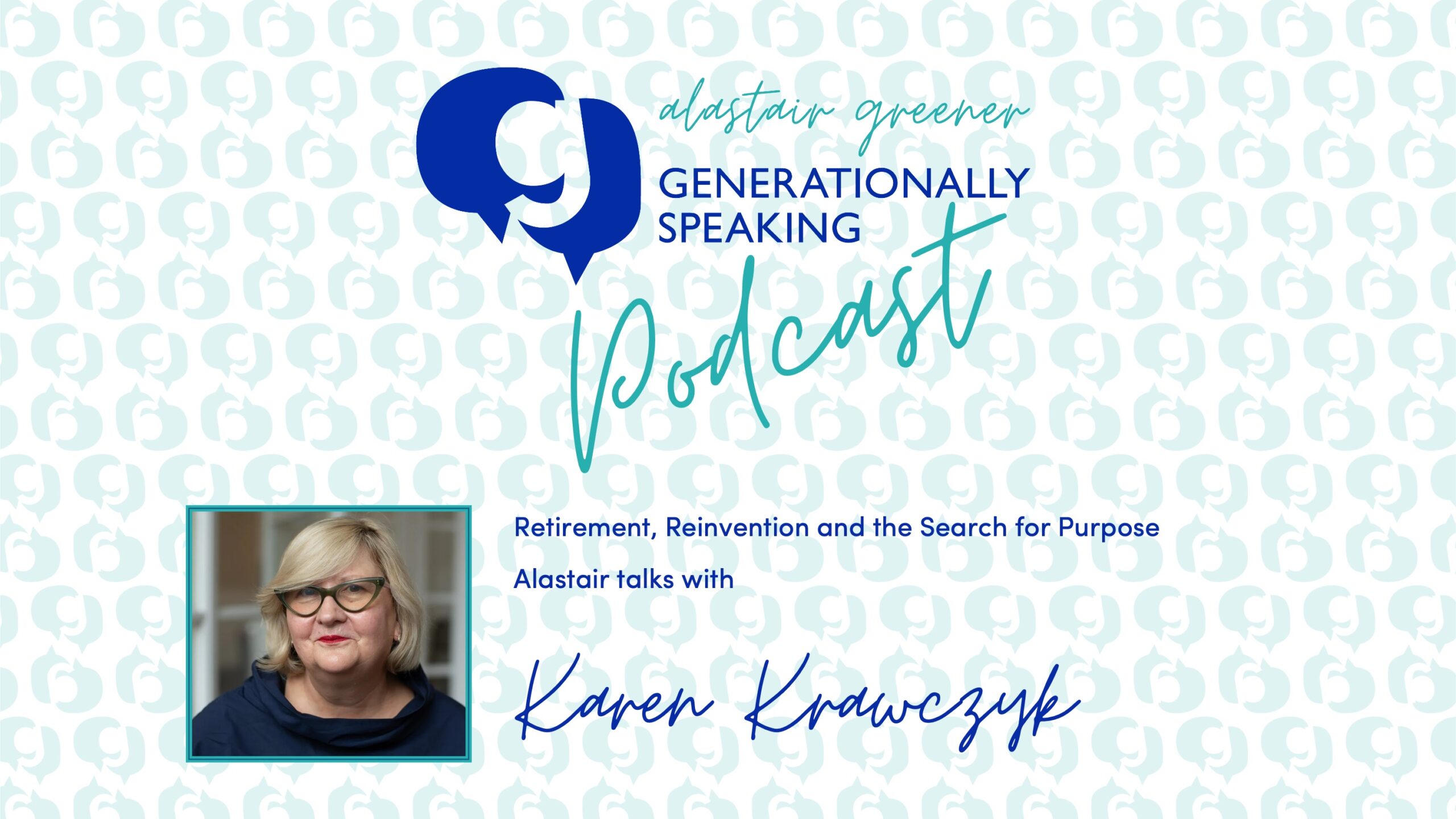
Alastair is joined by Karen Krawczyk, an author, facilitator and retirement coach who spent much of her career as a paediatric speech and language therapist in the NHS. Karen left at 60, invested in new skills and built a portfolio life combining work, volunteering, personal interests with a renewed sense of purpose. Having lost both her parents before she finished university, she never saw a parental role model as she moved into later life. It was that absence that is part of what drew her to write about retirement and to run the workshops she does today.
In this episode Karen makes the case that retirement is no longer a single, orderly event but an open-ended transition that many people reach without a plan or a vocabulary for it. She talks about why she dislikes the word ‘retire’, what the Blue Zones are, what the Japanese idea of ikigai tells us about purpose and longevity, and why the most valuable thing her workshops offer is simply a space to have the conversation. She also reflects on what she saw change in the NHS workforce across her career, and why she thinks curiosity and listening matter more than hierarchy.
Karen Krawczyk Takeaways:
- Retirement is a major life transition, not an event, and how you handled previous transitions is a good predictor of how you will handle this one
- Start being deliberate about it a couple of years out, and set expectations with the people around you, because it is their transition too
- The word ‘retire’ carries baggage. There is no equivalent word in Japanese, and in Spanish it translates closer to jubilation. Reconnect, redirect and refire are all worth considering instead
- Resist jumping straight into the next thing. The messy middle is uncomfortable but reflecting there produces a far more rewarding second act
- The Blue Zones point to the same two things again and again: community and a reason to get up in the morning
- Say yes. Try it once, and if it is not for you, you never have to do it again
- If someone close to you is approaching retirement, ask open questions about their expectations rather than assuming they will suddenly have time on their hands
Karen Krawczyk Links
Generationally Speaking Links: